Perry sits in northwest Dallas County on Iowa 141, with a historic downtown and plenty of older homes with brick chimneys. Those chimneys have stood through a lot of freeze-thaw cycles. Top Notch Chimney Sweep & Services has been repairing chimney masonry across Central Iowa since 2002, and our team has trained in Traditional Historic Masonry Restorations at the Campbell Center for Historic Preservation.
How Chimney Masonry Wears Out
Brick and mortar are porous. Water soaks in, freezes, expands and pushes the material apart a little at a time. Heat and the corrosive byproducts of fire wear on the inside. Normal settling of a house can crack a chimney too. On a chimney that’s decades old, all of that adds up.
Tuckpointing
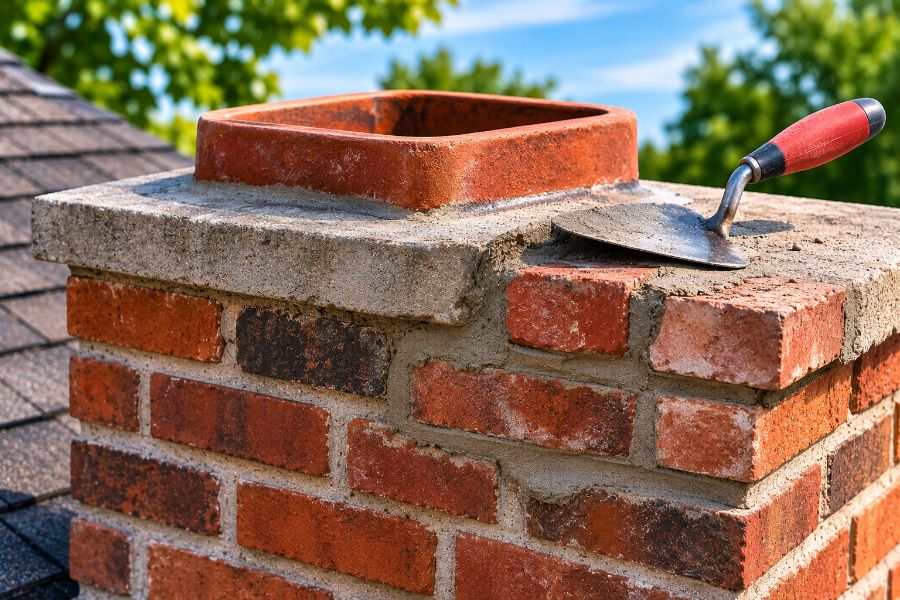
When mortar joints are crumbling or recessed, the chimney loses strength and lets in more water. Tuckpointing means grinding out the damaged mortar and packing in new mortar. Done right, it restores the structure and looks clean. It’s usually the first repair an aging brick chimney needs.
Brick Replacement
When brick faces flake or pop off, called spalling, water has been getting into the brick and freezing. We remove the damaged brick and replace it, matching as closely as possible. Our minor masonry repairs page covers tuckpointing, brick replacement and firebrick repair.
When a Rebuild Makes More Sense
Sometimes the damage is too widespread to patch. A chimney may lean, have loose bricks throughout the top courses, or have mortar that crumbles at a touch. In those cases, taking the chimney down to sound masonry, usually from the roofline up, and rebuilding it is the safer and longer-lasting fix. We’ll tell you honestly which situation you’re in.
Signs your chimney needs masonry work
- Mortar you can scrape out with a key
- Bricks with chipped or missing faces
- White staining on the brick
- Pieces of brick or mortar on the roof or ground
- A chimney that looks like it’s leaning
Protect the Repair
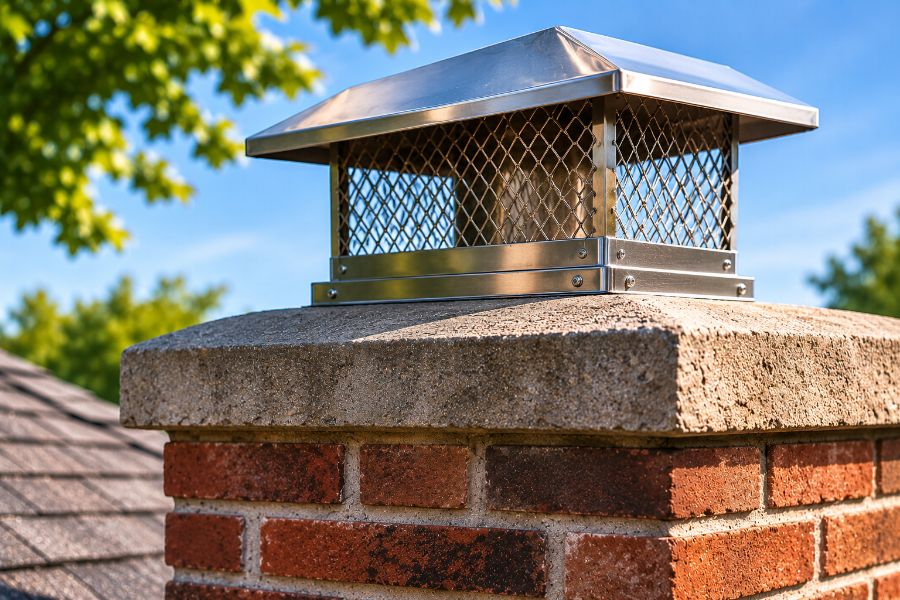
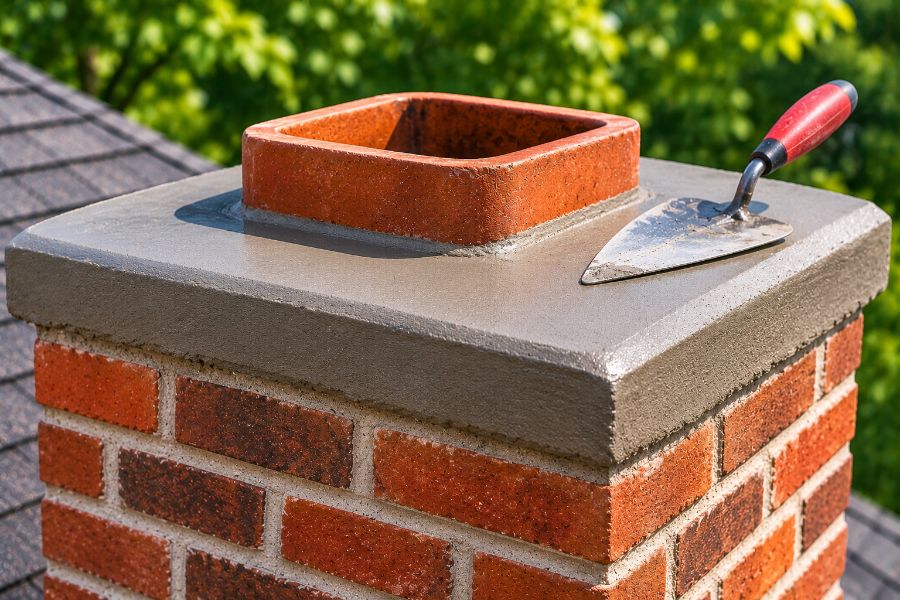
Once the masonry is sound, the top needs to keep water out. A solid crown is key; see chimney crown repair. A breathable waterproofing treatment helps the brick shed water while still letting it dry.
Inspect Before You Repair
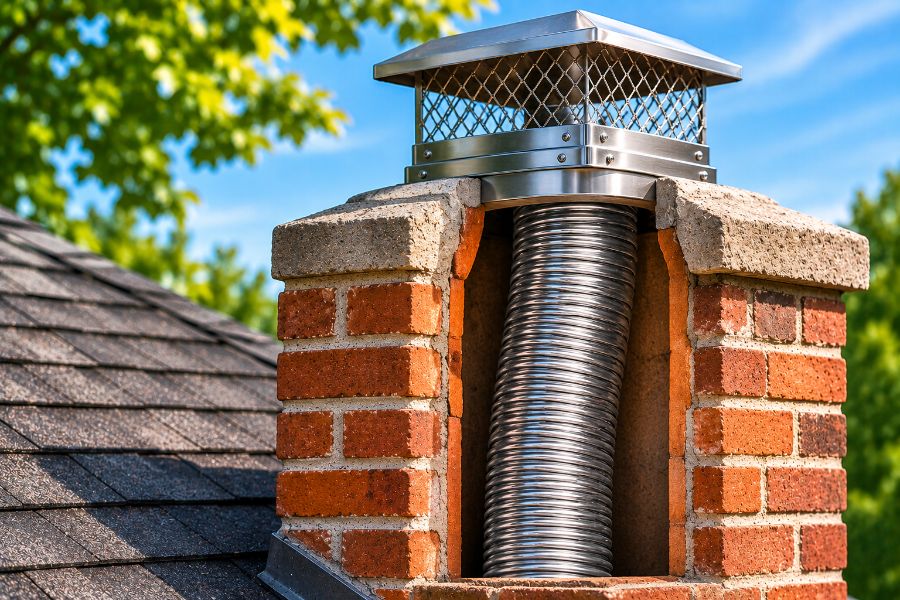
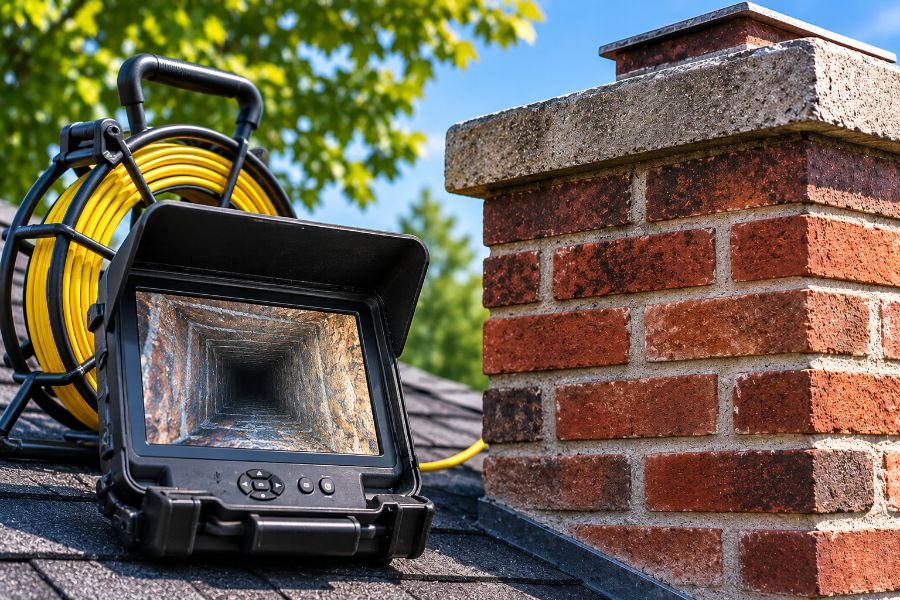
A chimney inspection with our camera shows us the inside of the flue as well as the outside masonry, so the repair plan covers the whole chimney.
Inside the Firebox
Masonry wear isn’t limited to the outside of the chimney. The firebrick that lines a masonry firebox takes direct heat every time you burn. Over the years, bricks crack and the mortar joints between them open up. Those gaps let heat travel toward the wall framing behind the fireplace, which is a real fire hazard.
If you see cracked firebrick or joints you can push a fingernail into, have them repaired before your next fire. Firebrick repair is part of our masonry work and usually a straightforward job.
Where Brick Meets the Roof
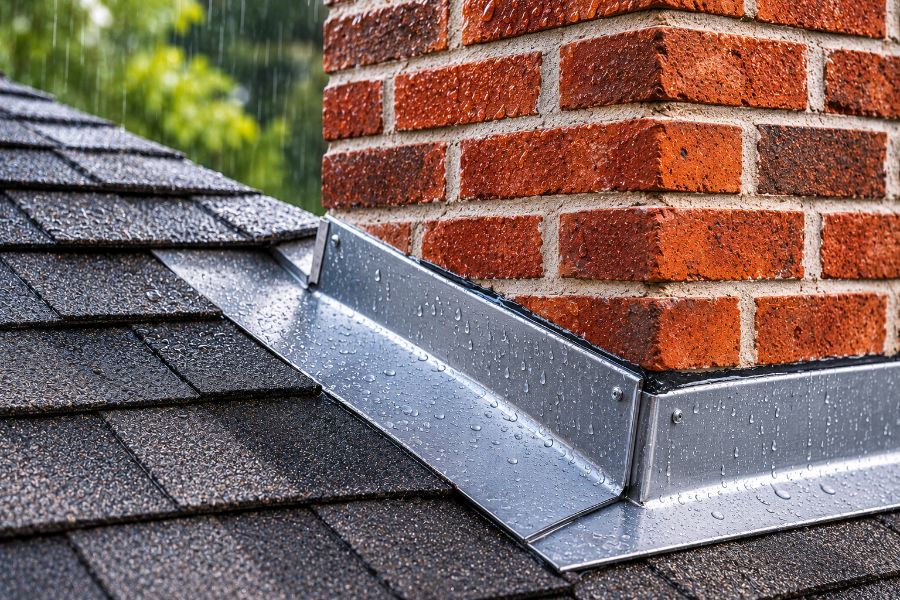
On many older Perry homes, the flashing around the chimney has been patched more than once. Layers of tar and caulk are a sign someone has been chasing a leak. The trouble is that patching only buys time. When flashing has lifted, rusted or was installed poorly, water gets behind it and into the brick and the roof framing.
When we do masonry work, we look at the flashing too. Our flashing repair puts the metal back in proper order so the new brickwork isn’t sitting in a leak.
Leave the Paint Can on the Shelf
A coat of paint or a clear sealant from the hardware store looks like an easy way to protect old brick. On a chimney, it often does the opposite. Brick and mortar need to let water vapor out, and a fire produces plenty of vapor. Paint and film sealers trap it inside the masonry, where it freezes in winter and breaks the brick apart.
If brick needs protection, the right product is a breathable water repellent made for chimney masonry. It soaks in instead of coating the surface and leaves the brick looking the way it did.
Making Repairs Blend In
On a historic house, a patch that stands out can bother you every time you pull into the driveway. We try to match brick size, color and texture as closely as possible, and we tool the new mortar joints to look like the old ones. Older Perry chimneys often used softer mortar than modern mixes, so we pick a mortar that works with the brick rather than against it.
Perfect matches aren’t always possible with brick that’s been weathering for decades, but a careful repair should look like part of the chimney, not an afterthought.
Clean Flue, Sound Brick
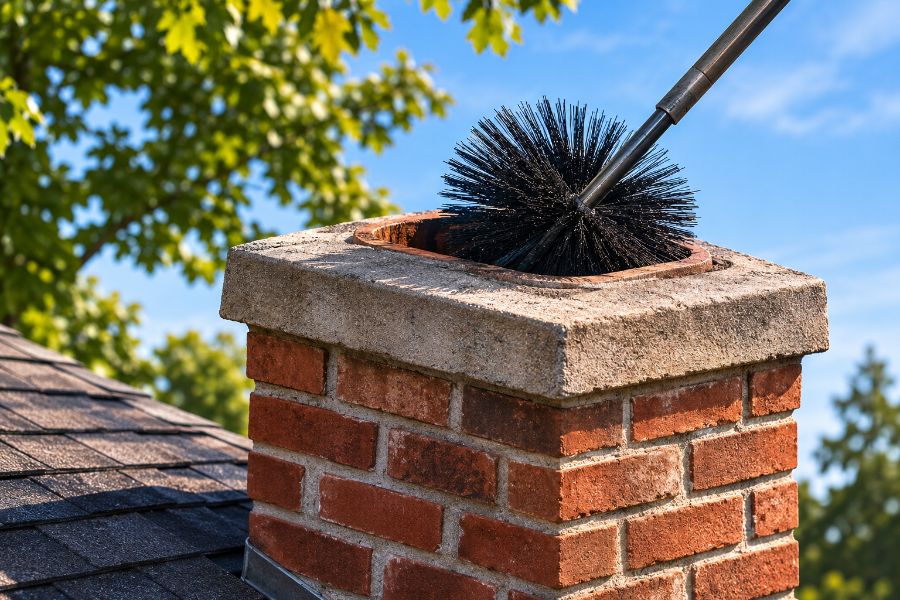
Masonry repairs are a good time to have the flue cleaned. A chimney sweeping removes creosote that eats at mortar from the inside and gives our camera a clear view of the liner.
Settling Cracks
Older houses move. Foundations settle, and a tall, heavy chimney doesn’t always settle at the same rate as the house around it. That can open cracks that run through several courses of brick, sometimes in a stair-step pattern along the mortar joints. Some are cosmetic. Others let in water or mean the chimney is pulling away from the house. Our inspection helps sort out which kind you’re looking at.
More Than One Flue
Many older homes in Perry have chimneys that serve more than the fireplace. A second flue may vent a furnace, a water heater or an old stove that was removed long ago. Those flues wear just like the fireplace flue, and the brick around them needs the same care. When we look at the masonry, we look at every flue the chimney carries.
Why Masonry Waits for Warm Weather
Mortar and concrete need time and moderate temperatures to cure. Work done in a cold snap can fail early, which is why we plan masonry jobs for spring, summer and early fall. Perry homeowners who spot problems over the winter should call and get on the schedule so the work can start as soon as the weather allows.
Booking early also leaves room for the unexpected. Once old brick comes out, we sometimes find the damage runs a course or two deeper than it looked from the ground, and a longer season gives us time to finish the job properly.
Masonry Training That Shows
Besides the Campbell Center, our crew has completed the Ahern Masonry Chimney & Fireplace Building Course in Minnesota. Tom Hunkele, who owns the business, is a Past President of the National Chimney Sweep Guild. Field work is backed by a Certified Chimney Professional and a CSIA Certified Chimney Sweep.
We also serve Grimes and Adel.
Worried about your chimney’s brickwork? Call (515) 249-6337 to schedule a Perry visit, or request an appointment online.