
Nevada is the Story County seat, a few miles east of Ames on US-30. Plenty of Nevada homes have brick chimneys that have been through a lot of Iowa winters. Top Notch Chimney Sweep & Services has been inspecting and repairing chimneys in Central Iowa since 2002, and we’d rather you call us early than after the damage spreads. A quick look from the yard is a good place to start.
Grab Binoculars and Walk Around the House
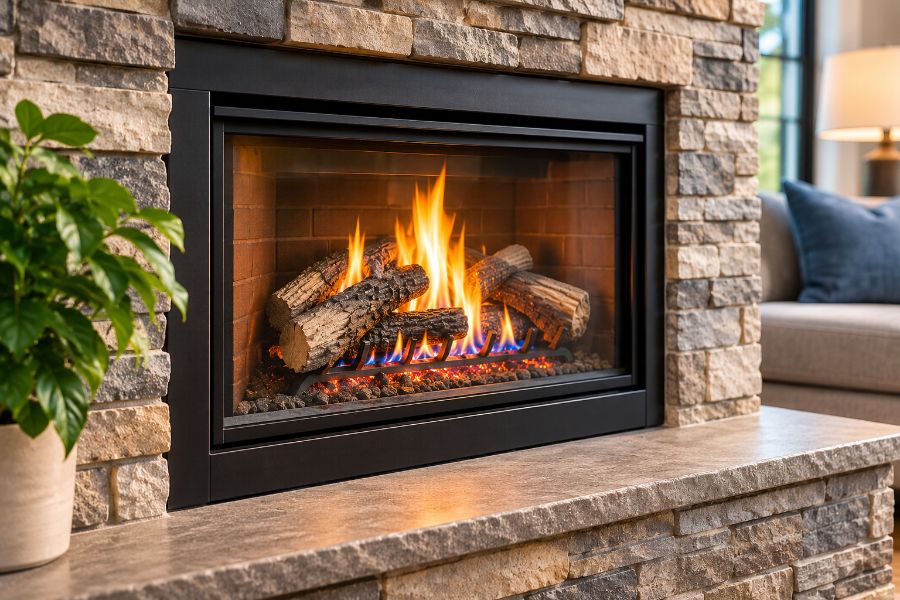
Stand back far enough to see the whole chimney, top to bottom. Stay off the roof; that’s our job.
At the very top: the crown
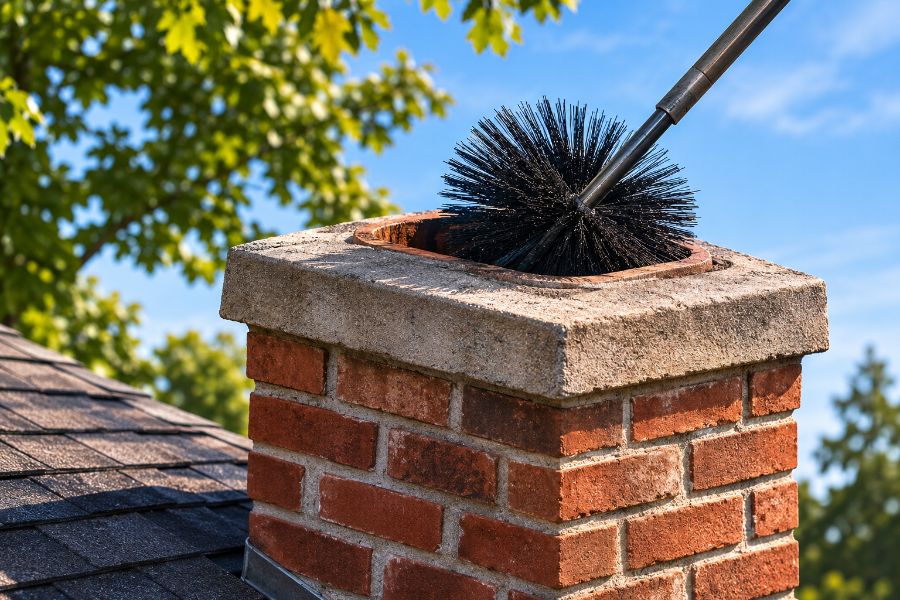
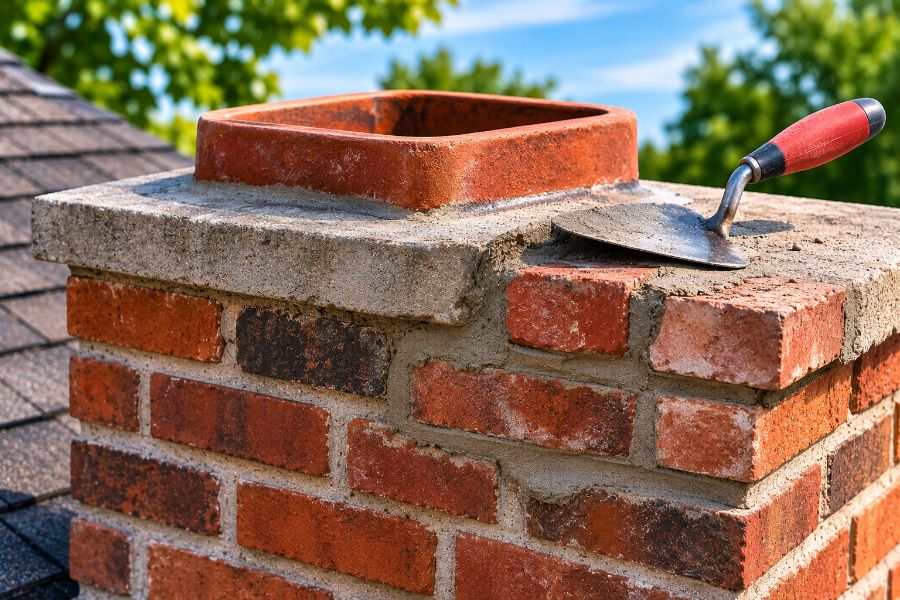
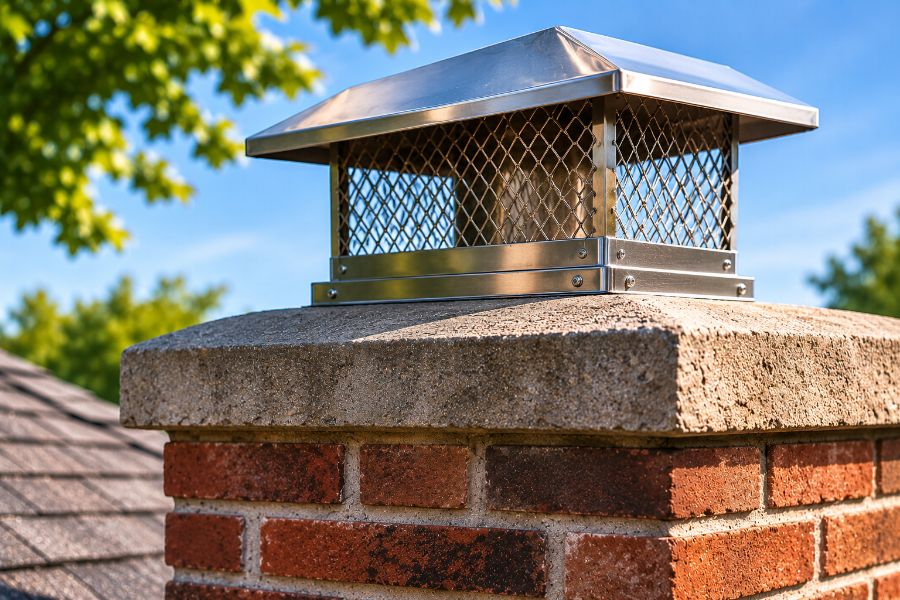
The crown is the concrete or mortar slab that caps the brickwork around the flue. It’s built to shed water away from the chimney. Cracks, chunks missing, or a crown that looks like it was just smeared on are common. Water gets through those cracks, freezes, and opens them further every winter. We offer chimney crown repair, from sealing small cracks to rebuilding a crown that was poorly built in the first place.
Over the flue: the cap
Can you see a metal cap with a screen? If not, rain, snow, birds and debris have a straight path down the flue.
The brick and mortar
Look for mortar joints that are recessed or crumbling, bricks with their faces flaking off (called spalling), and white chalky stains. That white residue, called efflorescence, is a sign water is moving through the masonry. Our masonry repairs include tuckpointing and replacing damaged brick.
Where the chimney meets the roof
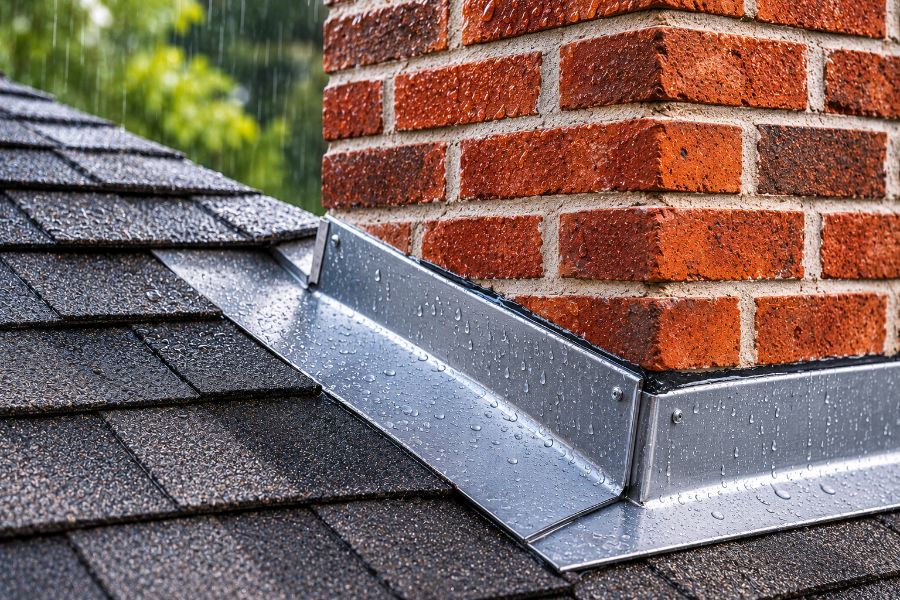
The metal flashing should lie flat and tight against the brick. Lifted edges, rust, or a lot of caulk smeared over the joint usually mean there’s been a leak.
Is it leaning?
A chimney that leans or pulls away from the house needs attention right away. Don’t use the fireplace until it’s been checked.
Stopping Water Before It Starts
Once repairs are done, a breathable water repellent helps keep moisture out of the brick while still letting it dry. Learn more about chimney waterproofing.
A lot of chimney damage starts small and stays out of sight for years. Checking from the yard once in spring and once in fall, and again after a big storm, takes five minutes and can catch a problem while the repair is still minor.
Clues You Can Find Indoors
The yard check covers the outside. A few minutes at the fireplace covers the rest. Open the damper and look for rust flakes or a damper plate that sticks. Check the firebox floor for water spots, bits of mortar or pieces of clay tile. Look at the ceiling and walls next to the chimney, especially upstairs, for water stains or peeling paint.
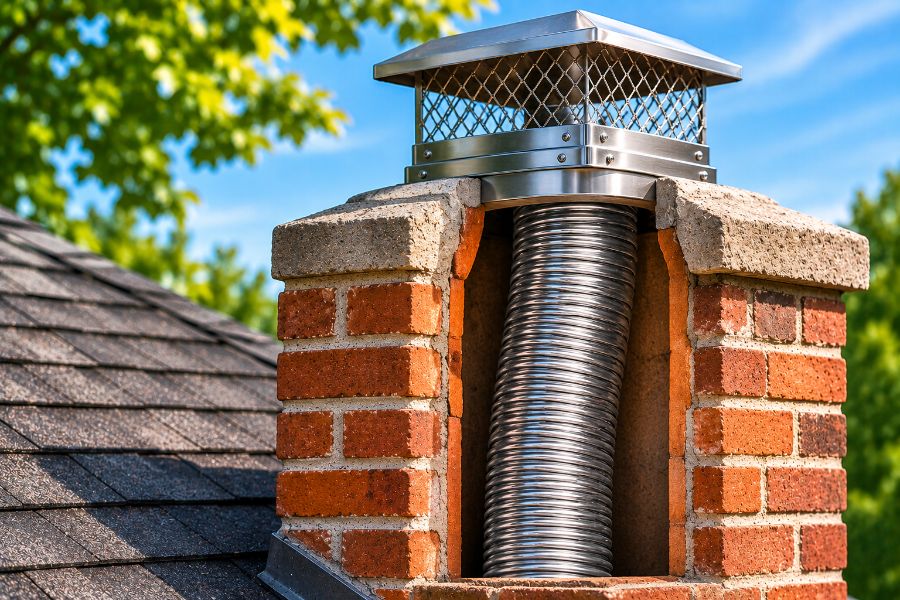
Tile fragments in the firebox deserve special attention. They usually mean the flue liner is breaking down, and a damaged liner can let heat and gases reach the framing around the chimney. If you find them, stop using the fireplace until it’s been looked at.
Flashing: Where Most Leaks Start
Flashing is a series of metal pieces that seal the joint between the chimney and the roof. That joint is one of the weakest spots on the house when it comes to water. Wind, animals and falling branches can lift flashing, and dented or poorly laid flashing can hold water until it rusts through.
From the ground you may notice a heavy layer of tar or caulk smeared over the joint. That’s usually a sign someone patched a leak instead of fixing it. Our flashing repair puts the metal back in proper order so water runs off the roof instead of into the attic.
Why We Skip the Quick Fixes
It’s tempting to grab a can of sealant or a bucket of paint from the hardware store. On brick, those products can do more harm than good. Masonry needs to breathe, because a fire produces water vapor that has to escape through the brick. Paint and film-forming sealants trap that vapor inside, and trapped moisture breaks the brick down from within.
The products we use are vapor permeable. They soak into the masonry, keep rain out and still let the chimney dry. They also don’t change the look of the brick.
Older Brick Calls for Careful Hands
A lot of Nevada’s housing goes back generations, and older chimneys often have softer brick and mortar than modern ones. Hard modern mortar packed into soft old brick can make the brick crack around it. Beyond the Campbell Center training, our team has attended the Ahern Masonry Chimney & Fireplace Building Course in Minnesota and CSIA’s Chimney Diagnosis & Documentation Course.
That background shapes how we approach a repair. We look at what the chimney was built with and choose materials that work with it.
A Twice-a-Year Habit
Iowa’s freeze-thaw cycle does most of its damage between November and April. A spring look shows you what the winter did. A fall look tells you whether the chimney is ready for another one. If you put both on the calendar, along with a cap and damper check, you’ll catch nearly everything before it spreads.
Spring is also the best time to book repairs. Masonry and crown work cure best in mild weather, and our schedule is open April through August. A Nevada homeowner who spots a crack in March can have it fixed well before the leaves turn.
Gas Chimneys Face the Same Weather
Switching a fireplace to gas doesn’t take the chimney out of the weather. The crown, cap, flashing and brick still catch every storm, and water still finds the weak spots. A gas fireplace also depends on the flue staying clear so exhaust can get out of the house. If you heat with gas in Nevada, the yard check above applies just the same, and so does an annual look inside the flue.
Gas exhaust is also full of water vapor. In an older masonry chimney, that moisture can condense on a cold flue and wear on the tile and mortar over time. It’s one more reason a gas-burning chimney still needs someone to look inside it now and then, even though there’s no soot or ash to clean up after.
Get the Full Picture
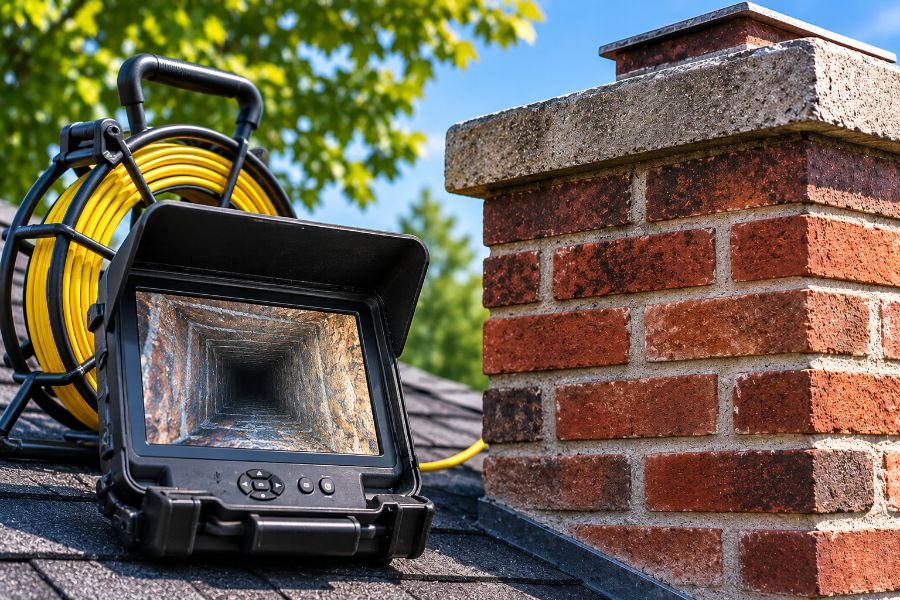
What you see from the ground is only the outside. A chimney inspection with our camera shows us the liner and flue too, so you’ll know the full story before deciding on repairs. Our team has trained in historic masonry restoration at the Campbell Center for Historic Preservation, which helps on older brick.
Top Notch is a family business, now in its 24th year. Tom Hunkele, the owner, is a Past President of the National Chimney Sweep Guild, and our staff includes a CSIA Certified Chimney Sweep and a Certified Chimney Professional.
We also serve Ames and Huxley.
Spotted something? Call (515) 249-6337 or schedule an inspection.