
Windsor Heights is a small city surrounded by Des Moines, Clive and Urbandale, with established neighborhoods and plenty of houses that have had a fireplace for decades. One of the most common calls we get from homes like these is simple: “My fireplace smokes.” Top Notch Chimney Sweep & Services has been sorting out draft problems around Central Iowa since 2002.
How a Chimney Is Supposed to Draw
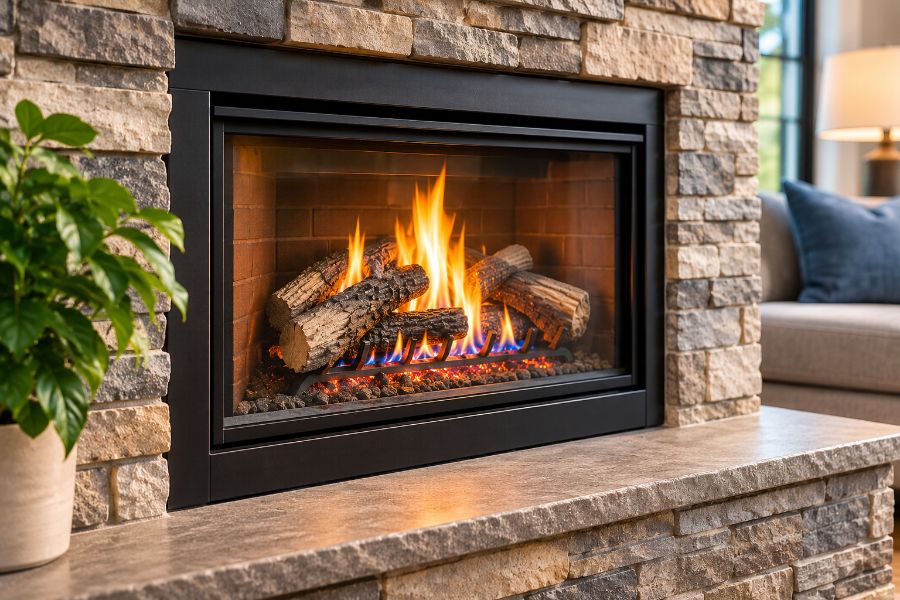
Hot gases rise. When a fire is burning and the flue is clear and warm, that rising air pulls smoke up the chimney and draws fresh air into the firebox. Anything that slows the flow or competes with it can turn the draft around, and the smoke has only one other place to go.
Common Causes of a Smoky Fireplace
Something in the way
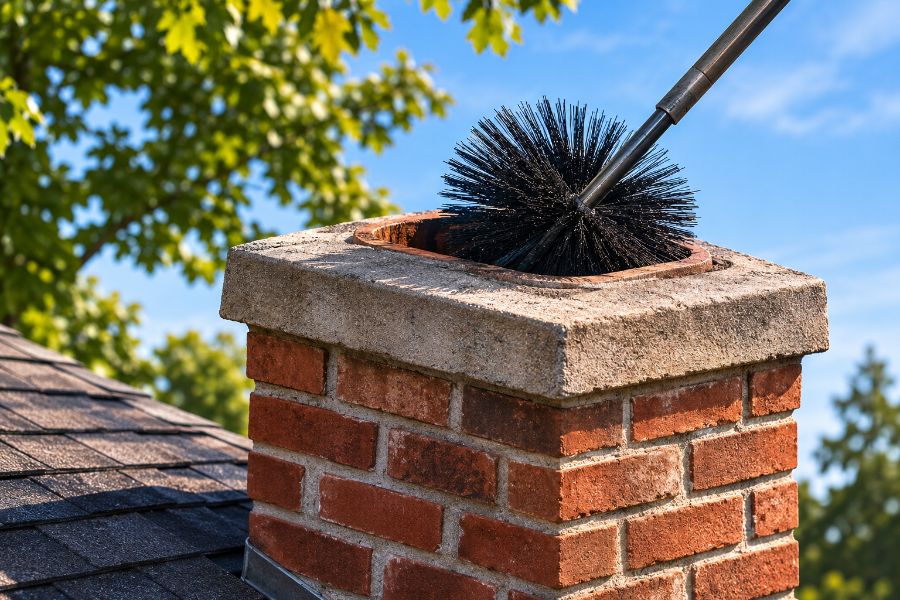
Creosote buildup narrows the flue. Nests, leaves and fallen debris can block it outright. A damper that doesn’t open all the way does the same thing. A chimney sweeping clears the flue so we can see what we’re working with.
A cold flue
On a cold Iowa day, a cold chimney can hold a column of heavy air that pushes down. Opening the damper a few minutes before lighting and starting with a small, hot fire helps warm the flue so it draws.
The house is working against the chimney
Tight modern windows, kitchen and bath exhaust fans, and even a running dryer all pull air out of the house. If the house can’t get makeup air, it may pull it down the chimney. Cracking a window near the fireplace when you light it is a quick test.
Wet wood
Green or damp firewood smolders, makes extra smoke and builds creosote faster. Seasoned wood burns hotter and cleaner.
Problems with the chimney itself
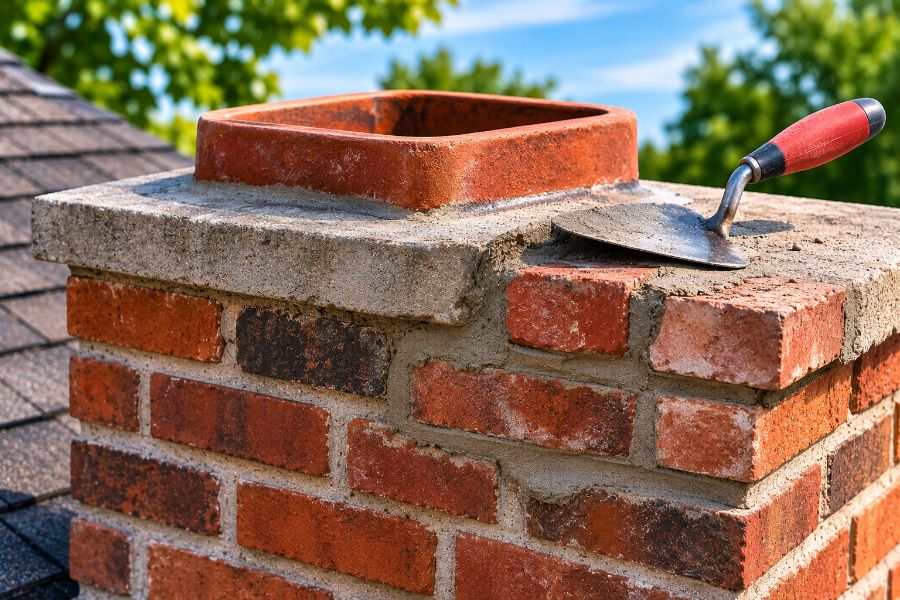
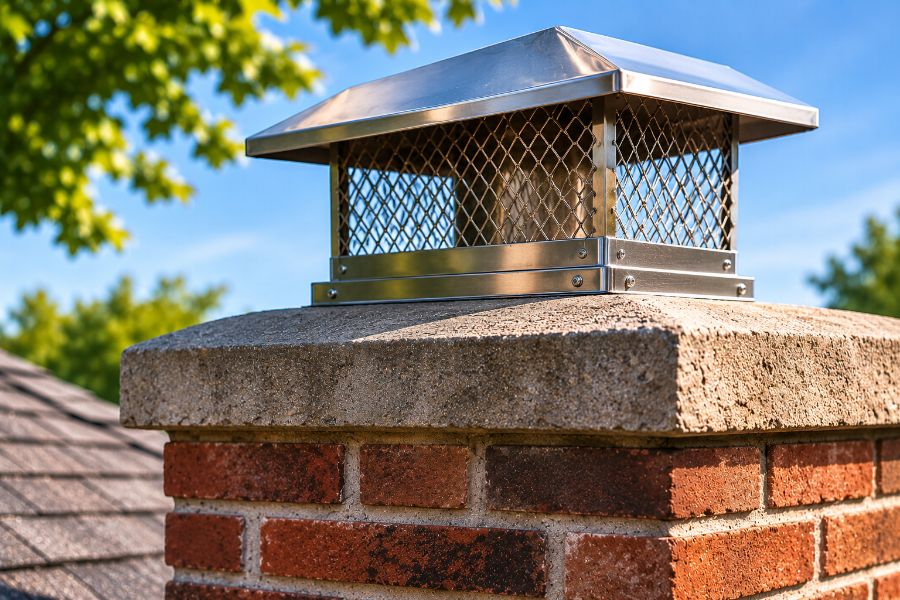
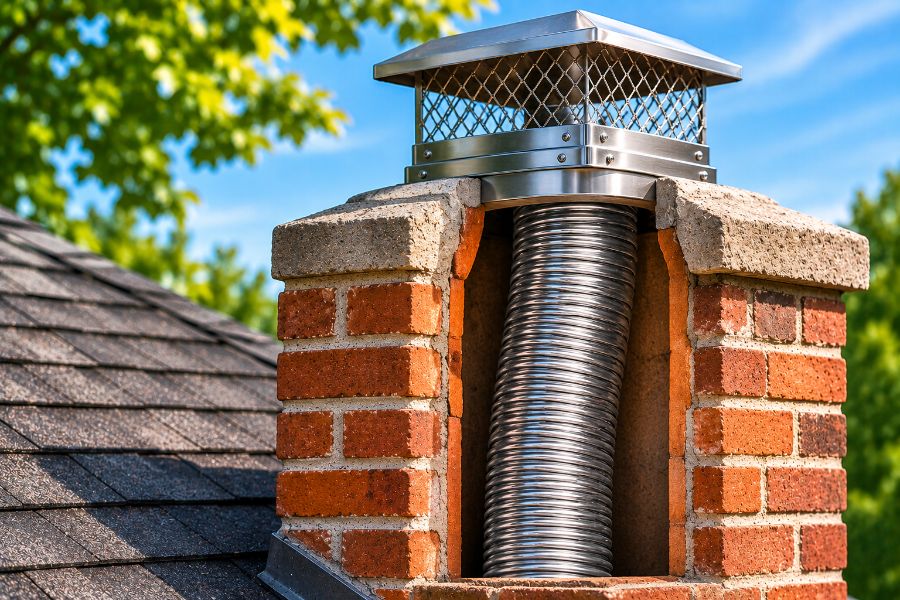
A missing or damaged cap lets wind blow straight down the flue. A damaged liner or a chimney that’s too short for the house can also cause trouble. These need a closer look.
When to Call Us
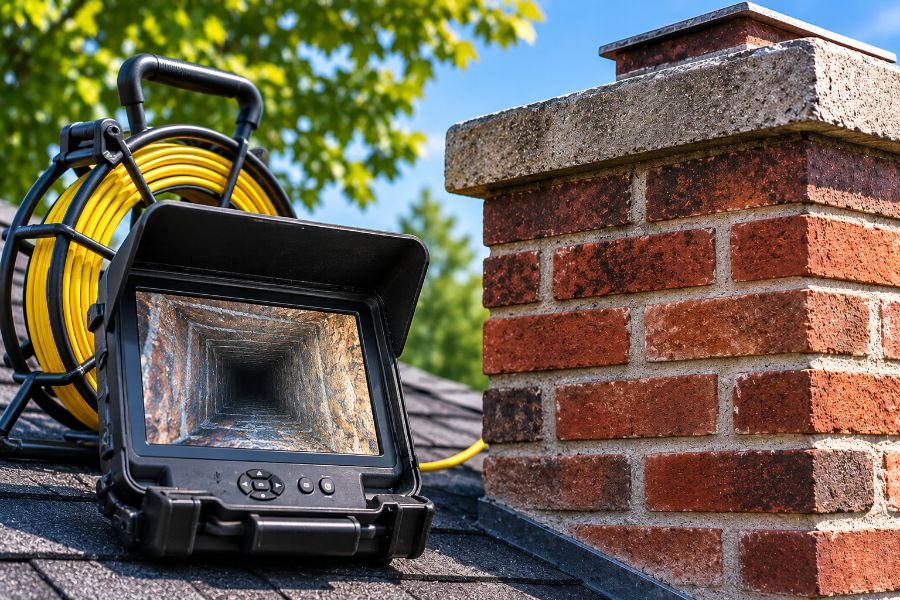
If the basics above don’t fix it, or you’re seeing smoke stains on the face of the fireplace, it’s time for a chimney inspection. We use camera equipment to see inside the flue and look over the cap, damper and smoke chamber. A smoky fireplace also means combustion gases are getting into the room, so don’t just live with it. If a cap is the issue, we can fit a new one; see chimney caps and dampers.
Smoke Stains Tell a Story
Look at the face of the fireplace, just above the opening. A dark smudge on the brick or the mantel means smoke has been rolling out of the firebox, sometimes for years. Where the stain sits gives us a clue. Stains along the top edge of the opening often point to a firebox that’s too tall for its flue or a damper that’s partly closed. Stains on one side can mean a draft problem that shows up only when the wind blows from a certain direction.
Black streaks on the outside of the chimney, near the top, say something too. They can show that smoke is cooling and dropping back down instead of clearing the roof, which is common when a cap is missing or the chimney sits lower than a nearby roof peak.
Gas Fireplaces Can Spill Too
Draft problems aren’t only a wood-burning issue. A vented gas fireplace or gas log set still depends on the flue to carry exhaust outside. If the flue is blocked or the damper isn’t open, the exhaust has nowhere to go but into the room, and you won’t see much smoke to warn you.
Signs to watch for are soot on the glass or logs, a flame that turns tall and yellow, or a sharp smell when the unit runs. Any of those mean it’s time to shut it off. Our gas log service checks the venting, the burner and log placement so the unit burns clean.
What Older Fireplaces Need
Many fireplaces in Windsor Heights were built decades ago, and their parts have been working a long time. On a masonry fireplace we look at the firebrick, the mortar joints inside the firebox, the throat damper and the smoke chamber above it. Rough, stepped walls in the smoke chamber make it harder for smoke to rise smoothly and can add to draft trouble.
Cracked firebrick is worth fixing promptly. Heat can pass through those cracks toward the framing of the house. Our minor masonry repairs cover firebrick, tuckpointing and damaged brick, so a fireplace that’s ready to draw well is also safe to use.
Sort It Out Before Winter
Draft problems are hardest to solve in January, when you want a fire and every chimney sweep is busy. If your fireplace smoked last season, call during our off-season, April through August. We’ll have time to find the cause and fix it, and your first fire next fall will be the test.
If you have neighbors with the same style of house, it’s worth asking whether their fireplace behaves the same way. Homes built around the same time often share the same quirks. Our crew works throughout Des Moines and the western suburbs, so these older chimneys are familiar ground.
Creosote and Draft Feed Each Other
A fireplace that draws poorly tends to get worse over time. When smoke moves slowly up a cool flue, more of it condenses on the walls as creosote. That buildup narrows the flue and roughens the surface, which slows the draft even more. Smoldering fires from damp wood or a partly closed damper speed the whole cycle up.
Creosote is flammable, so this isn’t only a comfort issue. A heavy layer can ignite and turn into a chimney fire. National fire safety guidance, NFPA 211, calls for an inspection every year and a cleaning whenever it’s needed. For a Windsor Heights fireplace that’s been smoky, a sweep is usually the first step toward fixing the draft, since it removes the buildup and gives us a clear view of the flue.
After the sweep, burn small, hot fires with dry wood and keep the damper fully open until the fire is out. If the smoke problem comes back anyway, the cause is somewhere other than the flue walls, and our inspection will help track it down. Plenty of Windsor Heights homeowners find that a clean flue and better burning habits fix most of the trouble on their own.
Certified, Careful Work
Our owner, Tom Hunkele, is a Past President of the National Chimney Sweep Guild, and he holds his crew to that standard. You’ll have a CSIA Certified Chimney Sweep working on your fireplace, backed by a Certified Chimney Professional on staff. We protect your floors and furniture and keep the job clean.
We also serve neighboring Clive and Urbandale.
Tired of a smoky living room? Call (515) 249-6337 or book a visit online.