Milo is a small town in Warren County, southeast of Indianola, surrounded by farmland and acreages. Many homes here have brick chimneys that have been through decades of Iowa winters, and the first place those chimneys usually start to fail is the very top. Top Notch Chimney Sweep & Services, a family owned and operated company, has been repairing chimney crowns across Central Iowa since 2002.
What the Crown Does
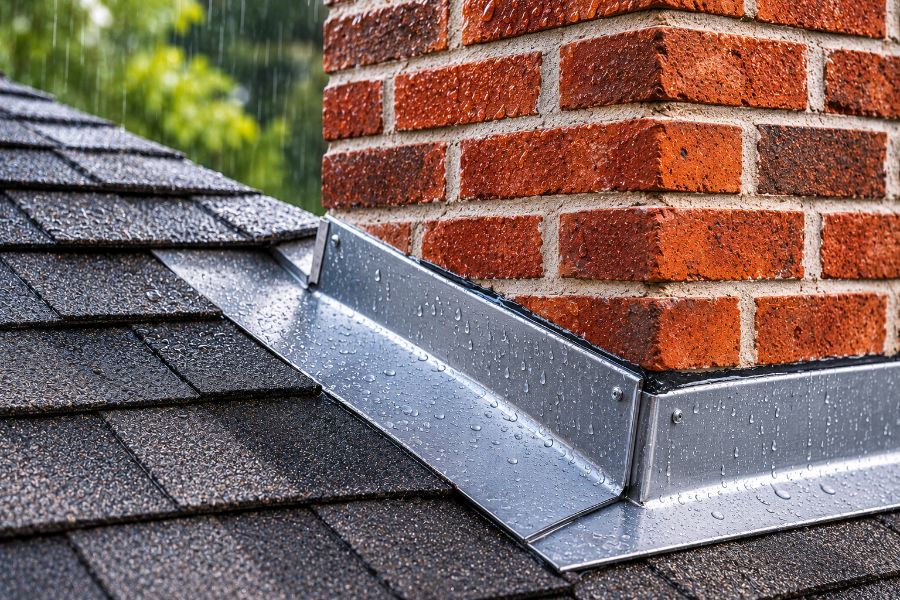
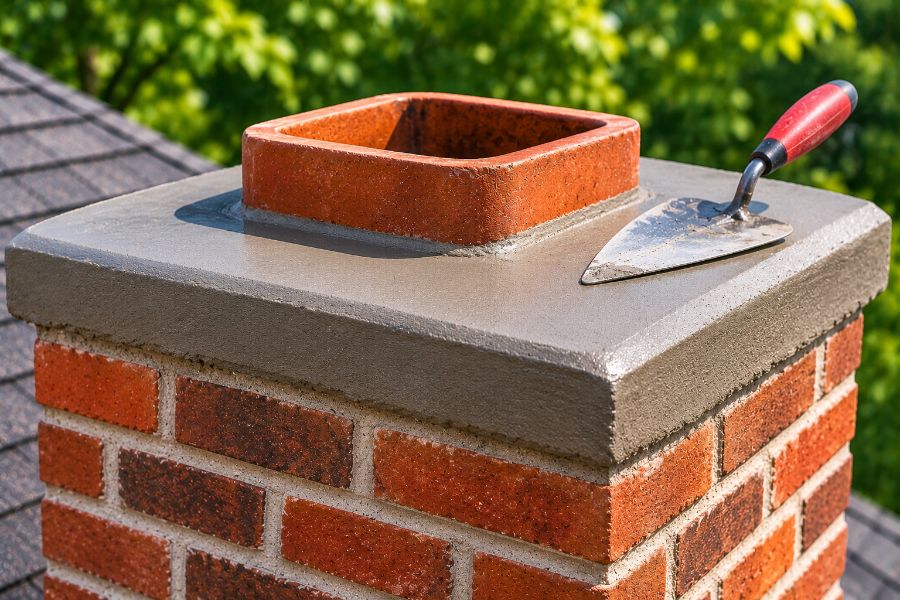
The crown is the slab that covers the top of a masonry chimney around the flue. Its job is to shed rain and snow away from the brick so water doesn’t soak down into the chimney. It takes more weather than any other part of the house: direct sun, rain, snow sitting on it, and freeze-thaw cycles all winter.
Why So Many Crowns Fail
They weren’t built right
It’s common to find crowns that were made with regular mortar mix, spread too thin, built without a slope, or without an overhang to drip water clear of the brick. These crack early and let water in.
Freeze and thaw
Even a well-built crown can develop small cracks. Water gets in, freezes and expands, and every winter the crack grows a little.
No room to move
The crown, the flue tile and the brick all expand and contract with temperature at different rates. When the crown is bonded tight to the flue tile, that movement cracks it.
What Happens When Water Gets Past It
Water that gets through the crown works down into the chimney. You may see crumbling mortar, flaking brick faces, white stains on the outside, rust on the damper or water in the firebox. Left alone, it can damage the flue liner and eventually the structure of the chimney.
Repair or Rebuild
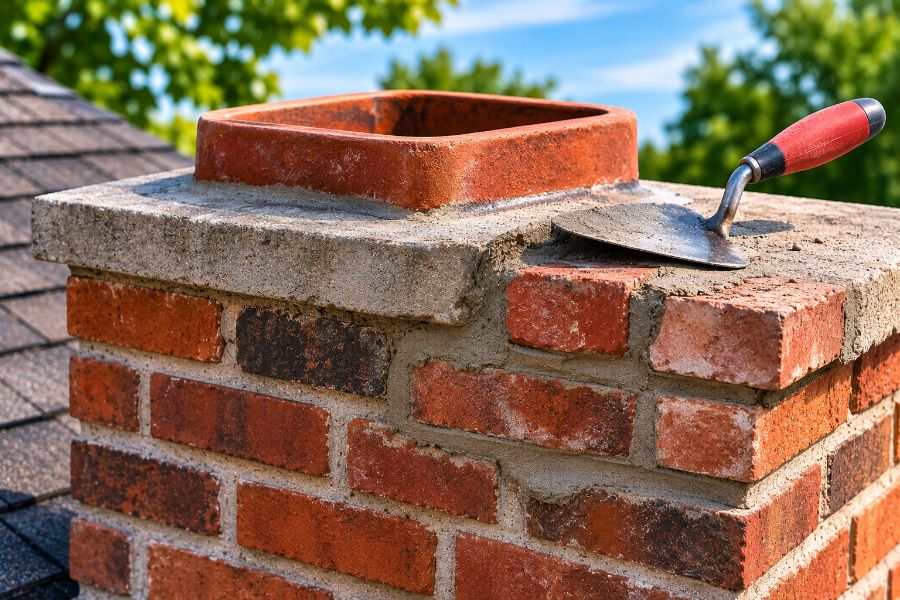
If the crown is basically sound with minor cracks, it can often be sealed and protected. If it’s badly cracked, crumbling or was poorly built in the first place, rebuilding it properly is the long-term fix. Our chimney crown repair covers both, and we’ll tell you honestly which one your chimney needs.
Things we look at along with the crown
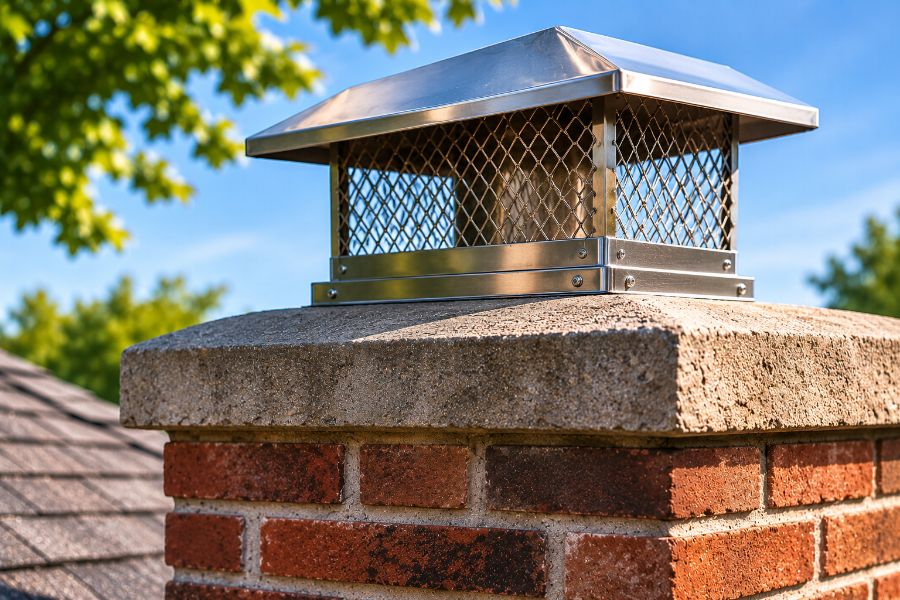
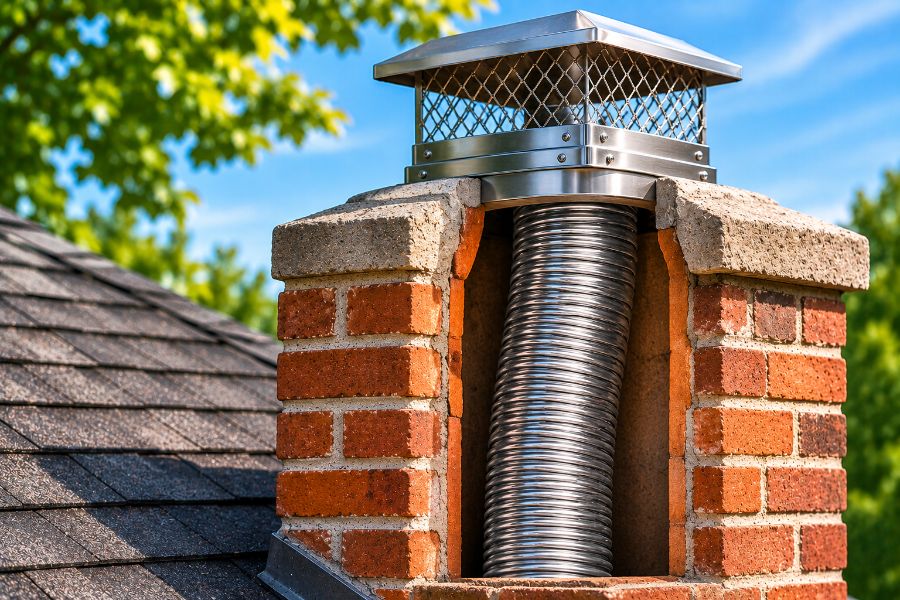
- The cap over the flue, which keeps water and animals out of the opening the crown can’t cover
- Mortar joints and brick near the top of the chimney
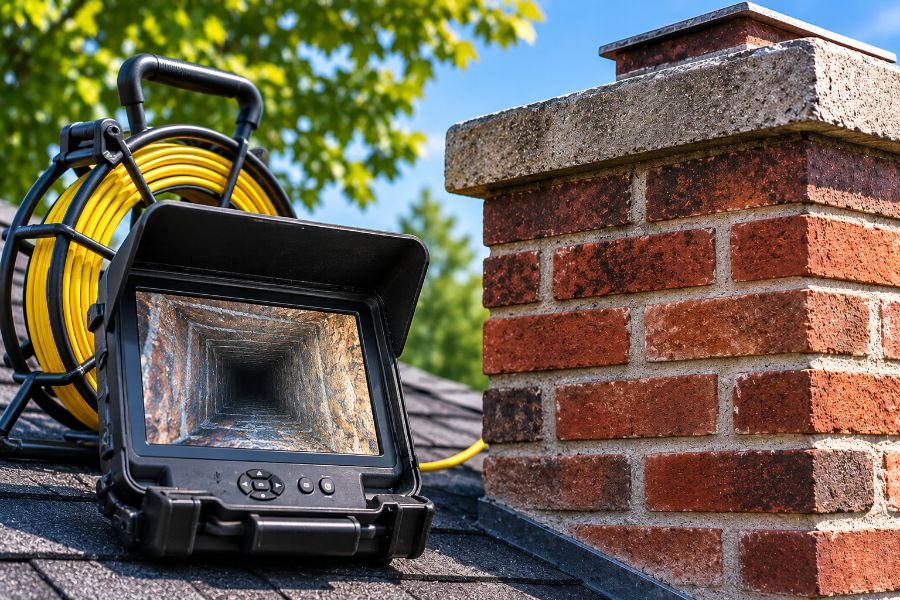
- The flue liner, using our camera
Masonry damage below the crown is handled through our masonry repairs, including tuckpointing and brick replacement. Once everything is sound, waterproofing helps the brick shed water. A chimney cap finishes the job.
How We Build a New Crown
When a crown has to be replaced, we start by removing the old one down to sound brick. The new crown is poured from concrete, ideally with reinforcing mesh, not the mortar mix that so many failed crowns were made from. We give it a slope so water runs away from the flue toward the edges.
The edges matter as much as the top. A proper crown sticks out 2 to 3 inches beyond the brick with a drip edge underneath, so water falls clear of the chimney instead of running down its face. At its thinnest point it should be at least 2 inches thick. Those details are what let a crown handle decades of Iowa weather instead of a few winters.
Open Country Means More Weather
Homes on the acreages around Milo often sit with nothing to block the wind for a long way in any direction. That exposure is hard on the top of a chimney. Wind drives rain into every crack in the crown, and full sun bakes it through the summer. Winter brings freeze-thaw cycles one after another. A crown that might last a long time in a sheltered yard can wear out faster out here.
What You Can Spot From the Ground
A pair of binoculars and a walk around the house will tell you a lot. Look for:
- Visible cracks or chunks missing from the slab on top
- Pieces of concrete or mortar on the roof below the chimney
- Moss or small plants growing on top of the chimney, which means it holds water
- A crown that sits flush with the brick, with no overhang at all
If you see any of these, it’s time for a closer look. A chimney inspection checks the crown along with the liner and the rest of the masonry.
Plan Crown Work for Warm Weather
Concrete needs mild temperatures to cure properly, so crown rebuilds are best done from spring into early fall. Our off-season runs April through August, which is also when our schedule has the most room. A crack you notice in March is a good reason to call before the busy season starts.
Gas or Wood, Same Crown
If your Milo home has switched from wood to gas, the crown still matters. It protects the brick no matter what’s burning below. Gas exhaust also carries a lot of moisture, and a chimney that’s already wet from a failed crown doesn’t need more. The crown, the cap and the masonry all deserve the same attention on a gas chimney as on a wood-burning one.
Farmhouse Chimneys
Older farmhouses around Milo sometimes have tall chimneys with more than one flue, or a second chimney that hasn’t been used in years. Every one of those still needs a sound crown. An unused chimney with a failing top keeps taking on water, and that water damages the brick and the framing around it whether anyone builds a fire or not. If it’s no longer needed, ask us about the best way to protect it.
Pair Crown Work With a Sweep
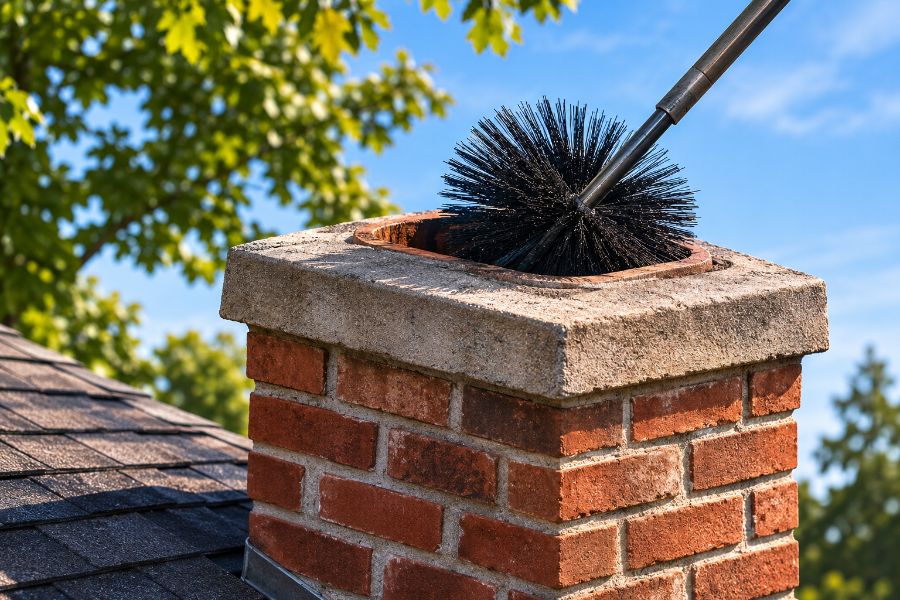
Since we’re already on the roof for a crown repair, it makes sense to clean the flue at the same visit. A chimney sweeping clears out debris that may have fallen in through the damaged crown and lets our camera see the full length of the liner. For Milo homeowners, it means one trip, one setup and a chimney that’s been looked at from top to bottom.
Crown problems rarely fix themselves, and they almost never stay the same size. A hairline crack this spring can be an open gap by next spring after a winter of water freezing inside it. Calling while the damage is small keeps your options open and the repair simpler.
Trained in Masonry Chimney Building
Our crew has trained at the Ahern Masonry Chimney & Fireplace Building Course and in historic masonry restoration at the Campbell Center. Tom Hunkele, who owns the company, once served as President of the National Chimney Sweep Guild, and our staff includes a Certified Chimney Professional plus a CSIA Certified Chimney Sweep.
We also serve Indianola and Carlisle.
Cracks on top of the chimney? Call (515) 249-6337 or schedule a visit online.