
Pleasantville is a Marion County town southeast of Des Moines, and plenty of homes out this way have a fireplace or wood stove that gets real use once the weather turns. Top Notch Chimney Sweep & Services has been sweeping chimneys across Central Iowa since 2002. We serve Pleasantville along with nearby communities like Carlisle and Indianola.
What Builds Up Inside a Chimney
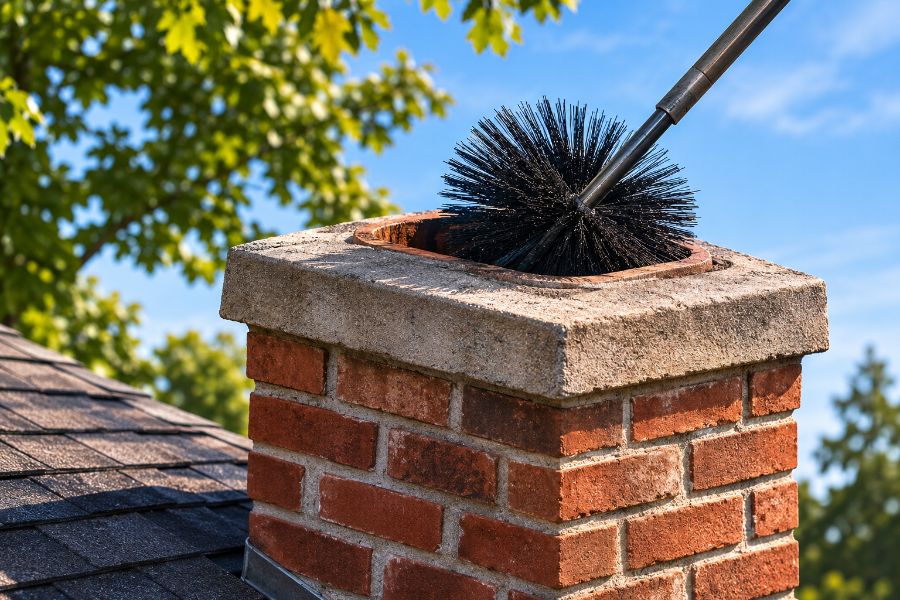
Every fire sends smoke up the flue, and as that smoke cools it leaves creosote on the walls. Creosote is flammable. A thin layer is normal. A thick, glazed layer is what chimney fires are made of. Burning wood that isn’t fully dry, or running a stove at a low, smoldering burn, speeds things up.
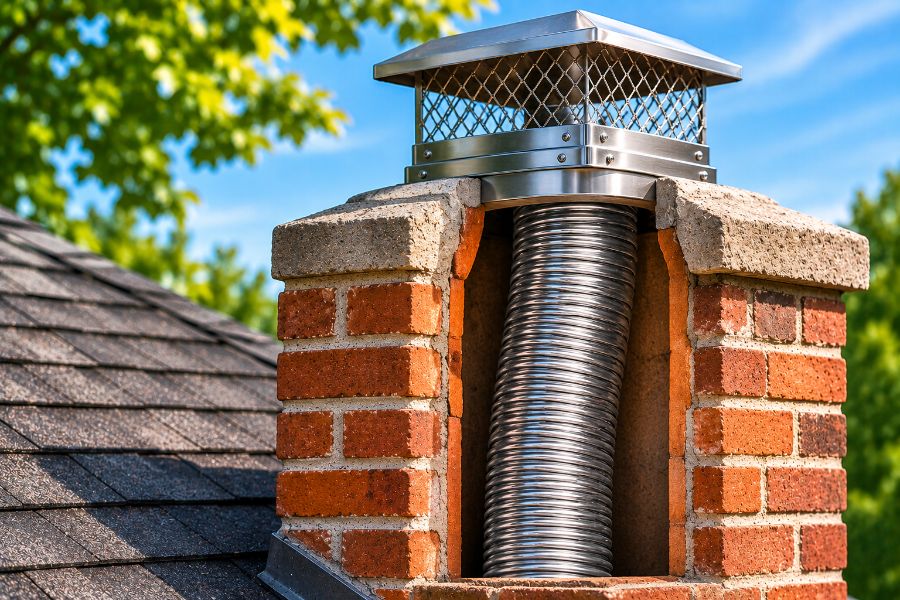
Creosote isn’t the only thing we find. Leaves, nesting material and the occasional animal end up in chimneys that don’t have a working cap. Any of that can block the flue and push smoke and carbon monoxide back into the house.
When to Schedule a Sweep
We recommend having the chimney swept and inspected once a year, ideally before you start burning in the fall or right after you finish in the spring. Spring is a good time if you want to beat the fall rush, and it also lets us catch winter damage before it gets worse over the summer. Our off-season stretches from April through August, so those months usually have the most open dates.
Call sooner if you notice:
- Smoke coming into the room instead of going up
- A strong smoky or tar-like smell from the fireplace, especially in humid weather
- Flakes of black debris falling into the firebox
- Birds or animals in the chimney
None of these mean you have to stop enjoying your fireplace. They just mean it’s time to have someone look.
How We Work in Your Home
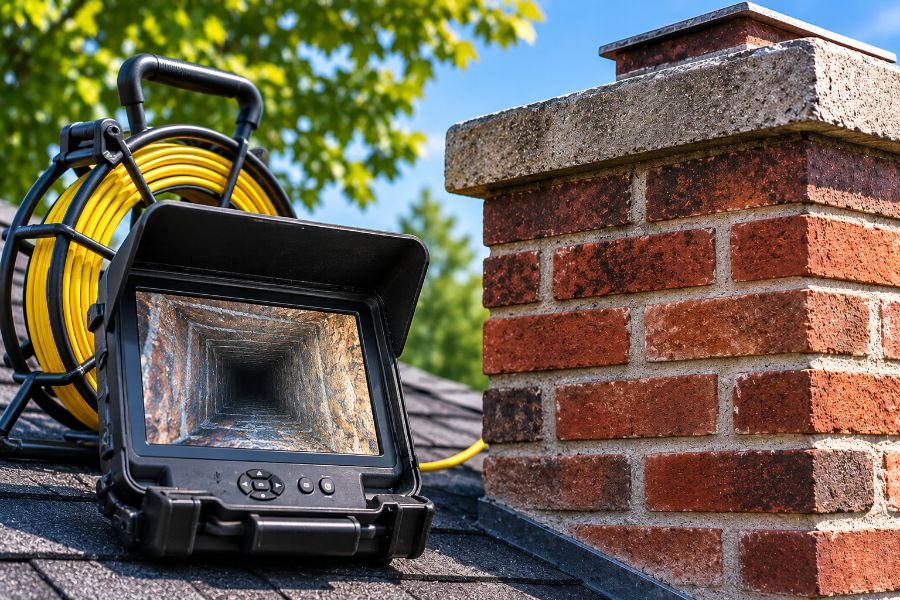
Our chimney sweeping service removes creosote, soot and debris from the flue, smoke chamber and firebox. Floors get covered, dust stays contained, and we back that with a mess-free guarantee. Our technicians are trained in Level 1 and Level 2 inspections and use camera equipment to see inside the flue, so we’re not guessing about what’s in there.
If we find a problem, we’ll show you and explain it plainly. Some of the most common fixes are simple:
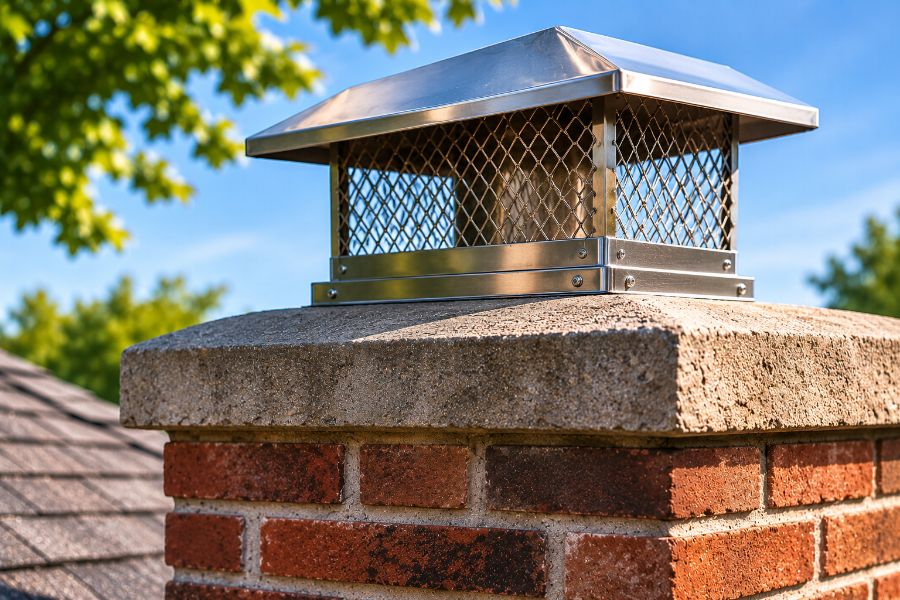
- A new chimney cap or damper to keep out rain, animals and debris
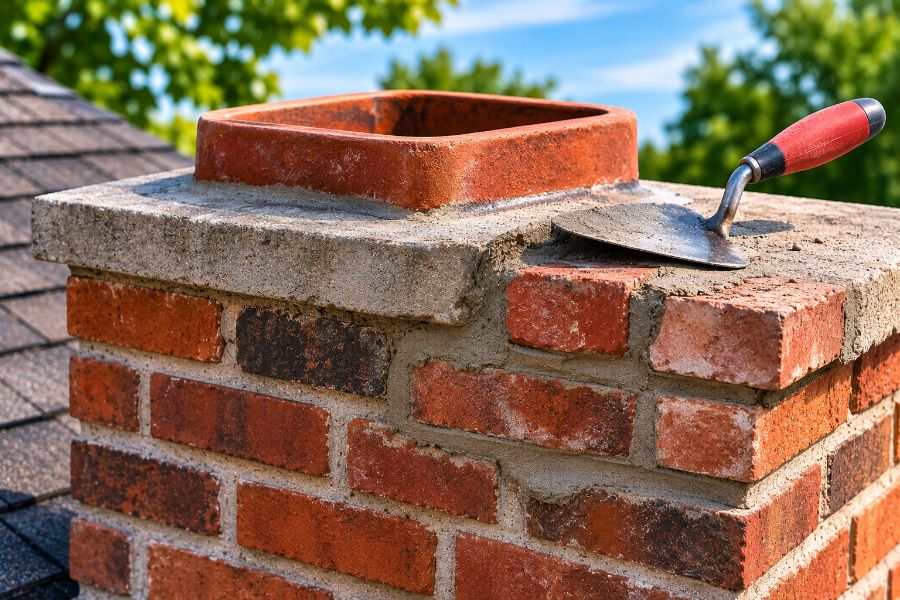
- Crown repair when the concrete slab on top of the chimney has cracked from freeze-thaw cycles
Habits That Keep the Flue Cleaner
How you burn makes a real difference in how fast creosote builds. Wood that’s been split and left to season burns hotter and cleaner than fresh-cut wood. Give the fire enough air instead of shutting it down to a smolder, especially overnight in a stove. Keep cardboard, wrapping paper and treated lumber out of the firebox. And if you notice heavy, dark smoke from the top of the chimney, that’s a fire that isn’t burning efficiently. None of this replaces the yearly sweep, but it can keep the buildup lighter between visits.
Where Water Gets Into a Chimney
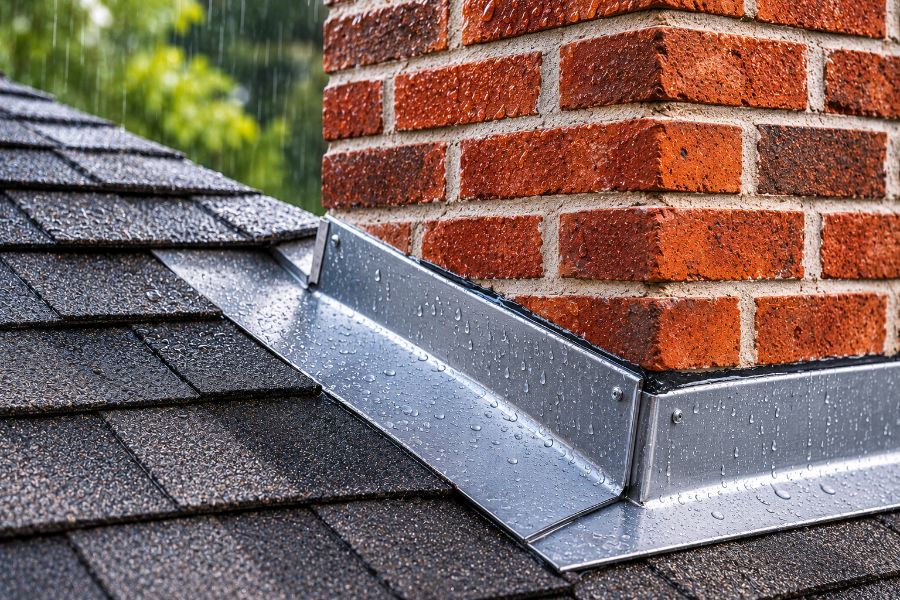
Rain doesn’t always come straight down. Storms moving across the open country around Pleasantville drive it sideways into the chimney and roof, which is why so many leaks start at the flashing. Flashing is the set of metal pieces that seal the joint between the chimney and the roof. When it’s bent, lifted by wind or was never installed right, water slips behind it and follows the framing down.
Fixing the flashing closes that path. If the brick itself is soaking up water, a breathable waterproofing product made for chimney masonry can help once repairs are done. Paint and hardware-store sealers trap moisture inside the brick and usually make things worse. See flashing repair and chimney waterproofing.
Small Masonry Repairs Before They Grow
Mortar joints are the softer part of a brick chimney, and they wear out first. When they start to crack or crumble, we remove the damaged mortar and pack in new, which is called tuckpointing. Bricks with broken or flaking faces can be cut out and replaced. Inside the fireplace, cracked firebrick should be fixed before the next fire, since gaps there let heat reach the walls around the firebox.
These jobs are far smaller when they’re caught early. Our team has taken the Ahern Masonry Chimney & Fireplace Building Course, and we aim for repairs that are clean and built to last. More on minor masonry repairs.
Not Every Fireplace Is Brick
Some Pleasantville homes have a factory-built fireplace instead of a masonry one. These units have a metal firebox lined with refractory panels, a metal flue and a chase cover on top. If you burn wood in one, it still collects creosote and still needs sweeping.
The difference shows up in repairs. A cracked panel or a rusted chase cover has to be replaced with a part made for that unit. Mixing parts can change how the fireplace handles heat, and that’s not something to guess at. We’ll identify the model and tell you what’s available. If parts for an older unit are no longer made, we’ll say so plainly and talk through the options.
The Other Vent in Your House
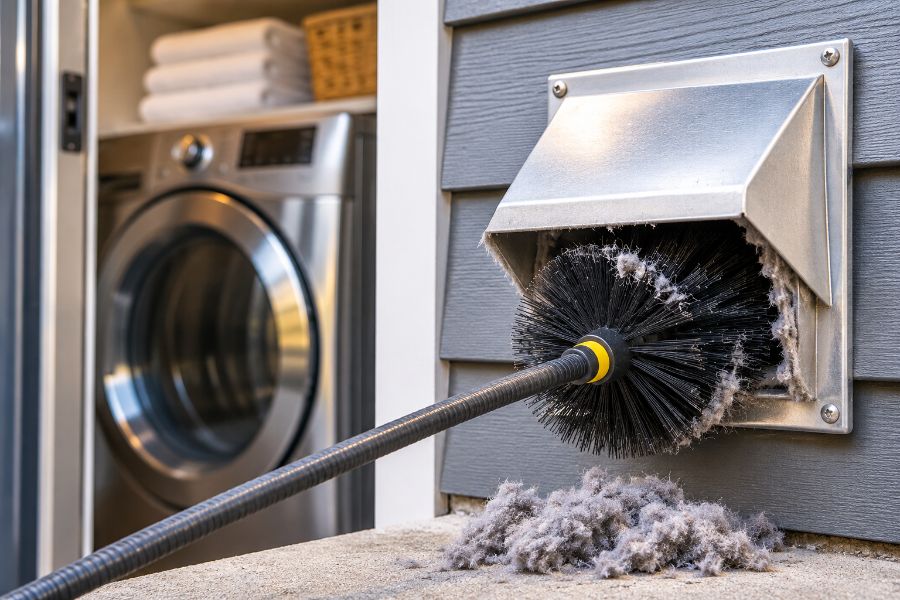
A clothes dryer pushes hot, lint-filled air through a duct every time it runs. The lint trap catches most of it but not all, and what gets through builds up along the walls and at every bend. A packed vent makes the dryer run longer and hotter, which wastes energy and raises the risk of a fire.
Watch for a dryer that’s hot to the touch, loads that need a second cycle, or a scorching smell. Our certified dryer vent cleaning clears the line with a HEPA vacuum and brushes designed for the job, and we check the duct for damage while we’re there. It fits easily into the same Pleasantville visit as the chimney.
Dust in the Ductwork
Ductwork that hasn’t been cleaned in a while holds dust, pet hair and whatever else has drifted in over the years. Every time the furnace or air conditioner starts, some of it moves. For our certified air duct cleaning, we look the heating and cooling equipment over first. After that, specialized brushes and a HEPA vacuum pull the buildup out of each run. If someone in your Pleasantville household has allergies, it’s worth adding to the visit.
Experience You Can Check
Top Notch has been in business since 2002, and the same family still runs it. Tom Hunkele served as President of the National Chimney Sweep Guild and holds the Certified Master Chimney Technician title. The crew also includes a Certified Chimney Professional and a CSIA Certified Chimney Sweep. We treat your home the way we’d want ours treated.
Get your chimney ready before the next cold snap. Call (515) 249-6337 or book your sweep online.