
Chariton is the Lucas County seat, south of Des Moines on US-34, close to Red Haw State Park. Many homes in town have masonry chimneys with clay tile liners, and after years of use those tiles crack and their joints open up. Top Notch Chimney Sweep & Services has been repairing chimney liners across Central Iowa since 2002. Chariton is a longer drive for us, so we schedule visits there ahead of time.
Why the Liner Matters
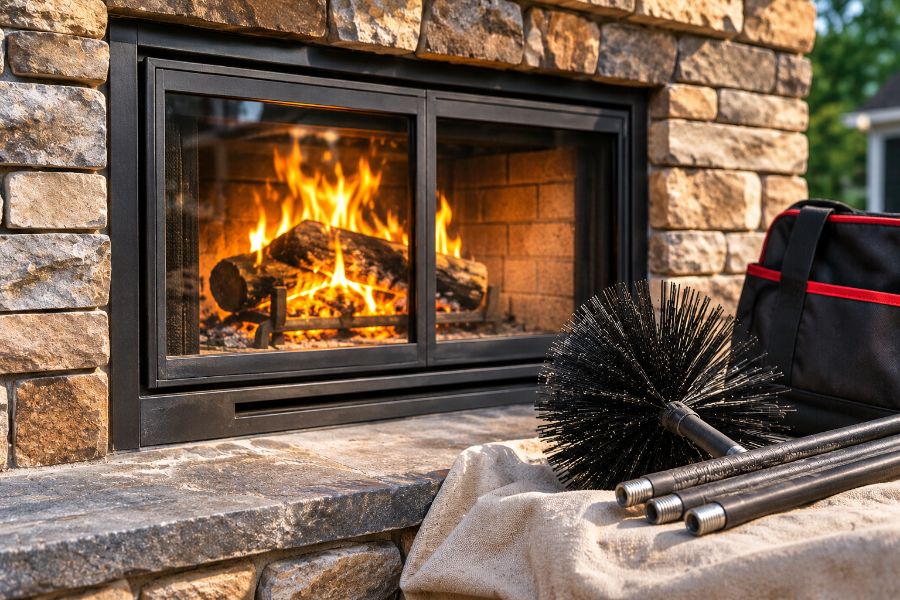
The flue liner contains the heat of the fire and carries smoke and carbon monoxide up and out. It protects the masonry and the wood framing near the chimney. When tiles crack or joints open, heat and gases can reach places they shouldn’t. A damaged liner means the chimney shouldn’t be used until it’s repaired.
How We Find Liner Damage
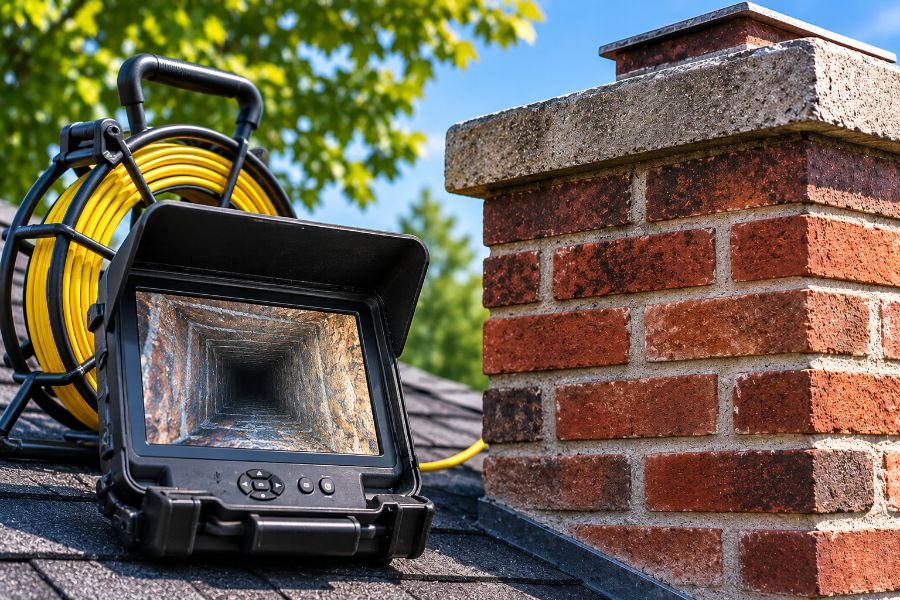
Liner cracks are almost impossible to see from the firebox. During a chimney inspection, we run a closed-circuit camera up the flue to look at each tile and joint. That tells us whether the liner needs a minor repair, a full restoration or replacement.
HeatShield: Restoring the Clay Tiles
Our technicians are certified HeatShield installers. HeatShield is a refractory sealant made to repair clay tile liners and stand up to heat and the corrosive byproducts of fire. There are three ways to apply it, depending on the condition of the liner:
- Joint repair. For liners with a few gaps or cracks, we use a custom foam applicator to fill the joints and smooth the surface.
- Resurfacing. For liners with widespread cracking that are still structurally sound, we apply a prep coat and then coat the entire flue interior.
- CeCure sleeve relining. For liners that need more help, we apply HeatShield, set a reinforced sleeve in the flue, and add another layer inside it.
After the work, we run the camera again to check that the finished surface is smooth and complete.
Stainless Steel Relining
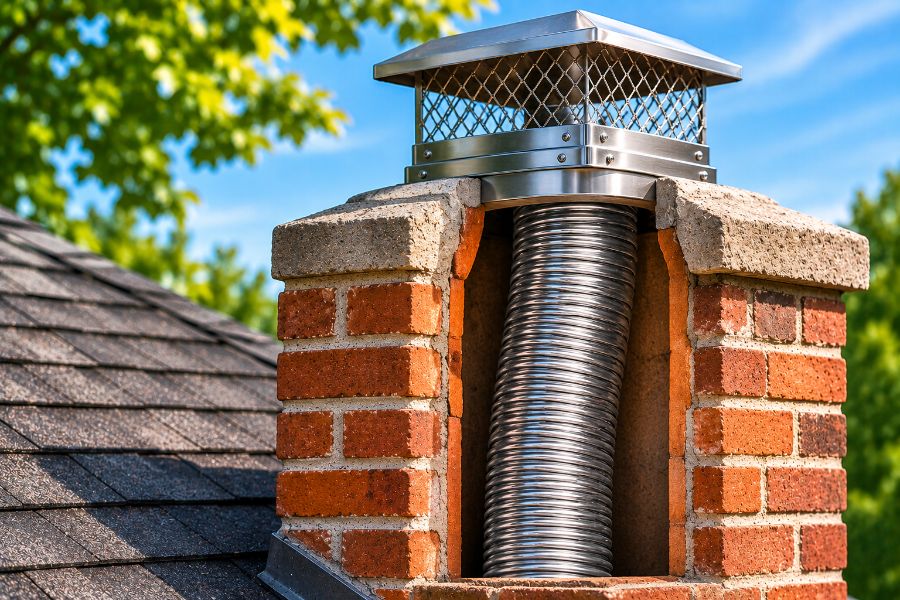
When the clay liner is too far gone, or if the chimney was built without one, a stainless steel liner is often the answer. Stainless liners are approved for all fuels and typically come with lifetime warranties when professionally installed. See chimney relining for more on both options.
Keep It in Good Shape
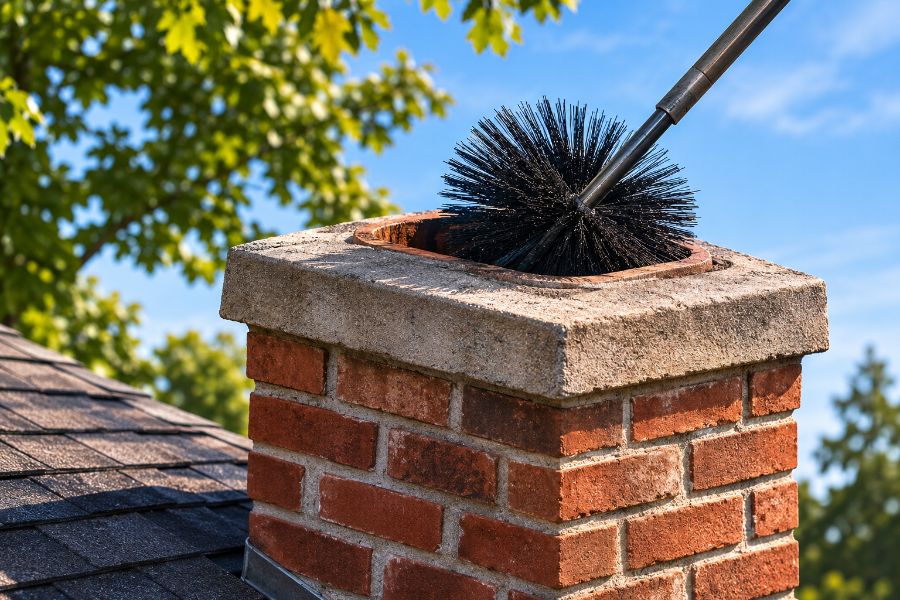
Water is a leading cause of liner damage. A good cap and a sound crown help protect your investment, along with an annual chimney sweeping to keep creosote off the liner.
Signs the Liner May Be Failing
You can’t see the liner from the living room, but it often leaves clues. Watch for these:
- Pieces of clay tile, flakes or crumbs of mortar in the firebox or on the smoke shelf
- Smoke spilling into the room on a fire that used to draw well
- A smoky smell in rooms that share a wall with the chimney
- A loud roaring or popping from the flue during a past fire, which can mean a chimney fire
A chimney fire is especially hard on clay tiles. The sudden heat can crack them from top to bottom, even if the fire burned itself out quickly. After any suspected chimney fire, the system needs a Level 2 inspection with a camera before it’s used again.
Why Clay Tiles Crack
Clay tile is a good material, but it has limits. It doesn’t like sudden temperature changes, so a hot fire lit in a cold flue puts stress on it. The joints between tiles are filled with mortar, and that mortar wears down from heat, acids in the smoke and moisture over the years. Water coming in from the top of the chimney makes it worse, especially when it freezes in the joints.
Normal house settling can shift tiles too. Once a joint opens, heat and gases can get into the masonry behind it. That’s why the camera matters so much. It lets us see each joint, not just the opening at the top.
New Stove or Fuel? Check the Liner
A liner sized for an open fireplace isn’t always right for a wood stove, an insert or a gas appliance. Switching fuels or connecting a new appliance changes how the flue needs to perform. National guidance calls for a Level 2 inspection whenever a change like that is made to the system.
If you’re planning to add a stove or insert in your Chariton home, call us before the new unit arrives. We’ll check whether the existing liner can handle it or whether a properly sized stainless liner is the better choice.
Protect the Top So the Liner Lasts
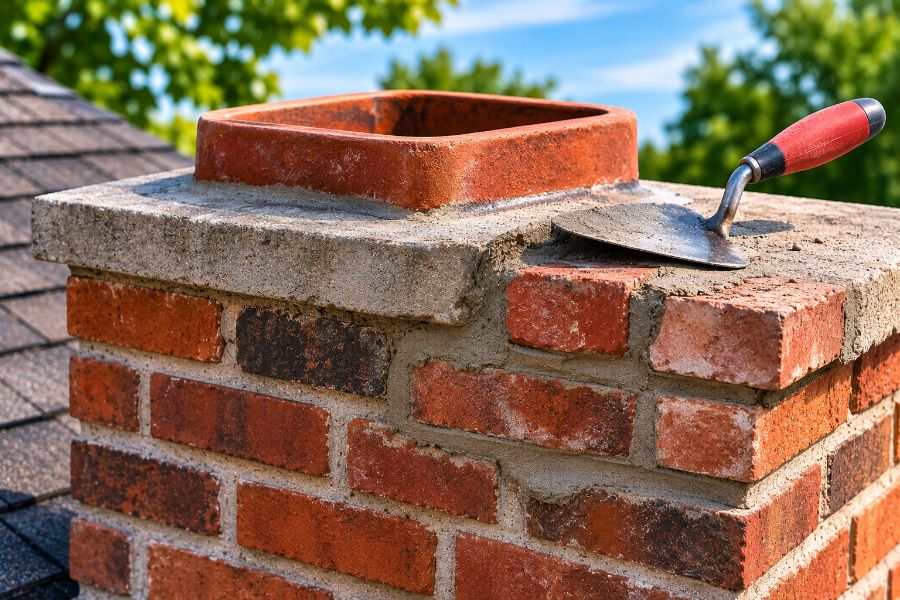
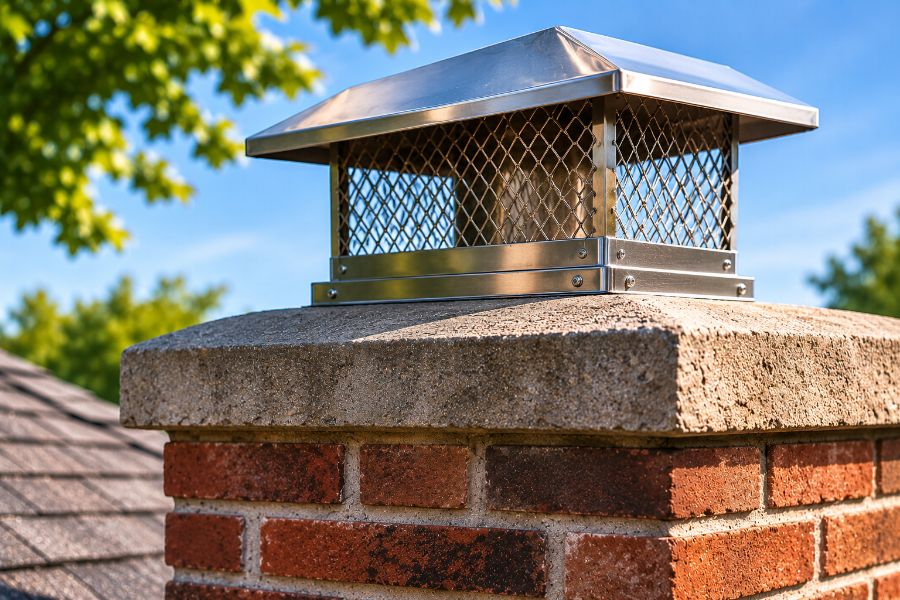
A repaired liner still needs protection from above. Without a cap, rain falls straight down the flue and soaks the tiles and joints. Our stainless steel chimney caps carry a lifetime warranty. A cracked or poorly built crown lets water into the brick around the liner, so a chimney crown repair is often part of a complete liner project.
How a Chariton Liner Project Usually Goes
Because of the distance, we plan Chariton work with care. The first visit is usually a sweep and camera inspection. That tells us whether HeatShield or a stainless liner is the right fix and what materials to bring. The repair itself is then scheduled as its own visit.
Calling during our off-season, April through August, gives the most room to fit both visits in before you need the fireplace. In the colder months our schedule fills quickly, so plan ahead and call to set a date.
Chimneys Built Without a Liner
Some older chimneys were built with no flue liner at all, just brick and mortar from the firebox to the top. Those chimneys were common once, but bare masonry doesn’t hold up well to heat and corrosive exhaust, and it gives gases a path through every mortar joint. If our camera shows an unlined flue, the safe answer is to install a liner before the chimney is used again. A stainless liner is usually the way to go in that case.
Restore Before You Replace
When the clay tiles are still structurally sound, restoring them with HeatShield can save you from paying for a completely new liner. It keeps the original clay flue in service and seals the joints and cracks that were letting heat and gases escape. Not every liner qualifies, and we’ll be straight with you about whether yours does. Plenty of Chariton chimneys with cracked joints turn out to be good candidates.
Experience You Can Rely On
Liner work calls for training, not guesswork. Our team includes a CSIA Certified Chimney Sweep and a Certified Chimney Professional, along with certified HeatShield installers. Tom Hunkele, a Past President of the National Chimney Sweep Guild, has run the company with his family for 24 years.
We also serve Osceola and Indianola.
Worried about your liner? Call (515) 249-6337 to schedule a Chariton visit, or send a scheduling request.