Corydon is the Wayne County seat in southern Iowa, a good drive from the Des Moines metro. Top Notch Chimney Sweep & Services serves Corydon and the surrounding area by appointment. Call ahead and we’ll get you on the schedule. We’ve been working on chimneys in Iowa since 2002, and water damage is one of the most common problems we see.
Why Chimneys Leak
A chimney sticks up through your roof and takes weather from every direction. There are several places water can get in, and fixing the wrong one means the stain on your ceiling comes right back. Here’s where we look.
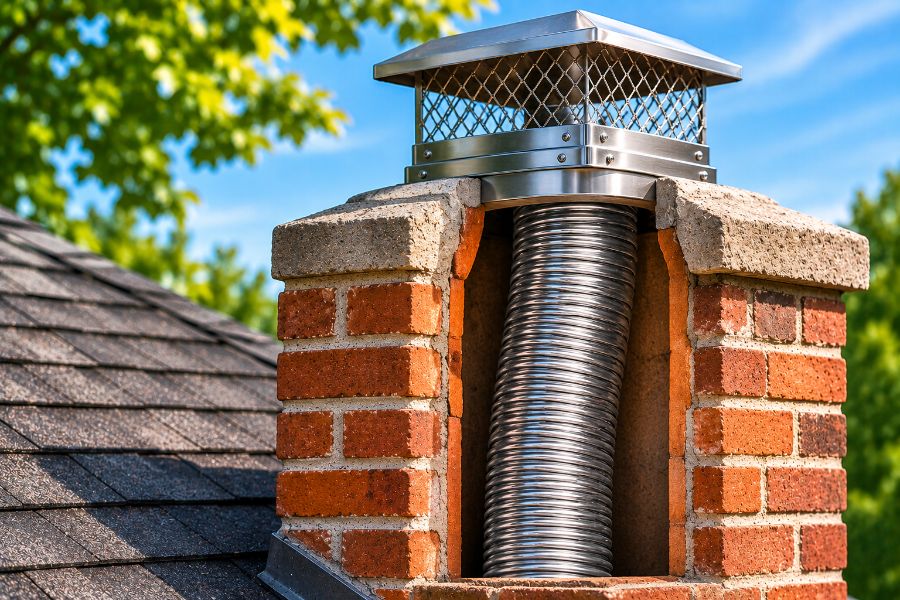
The crown
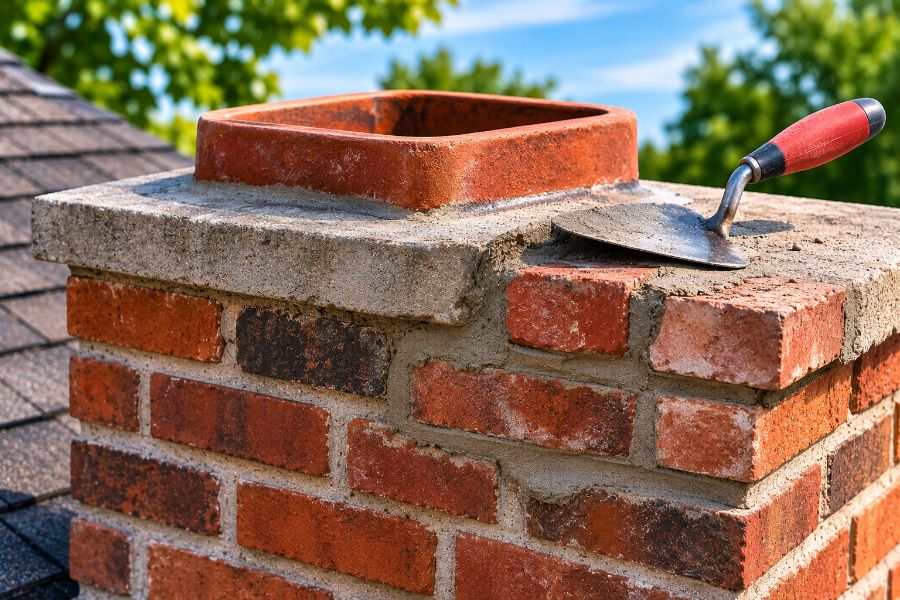
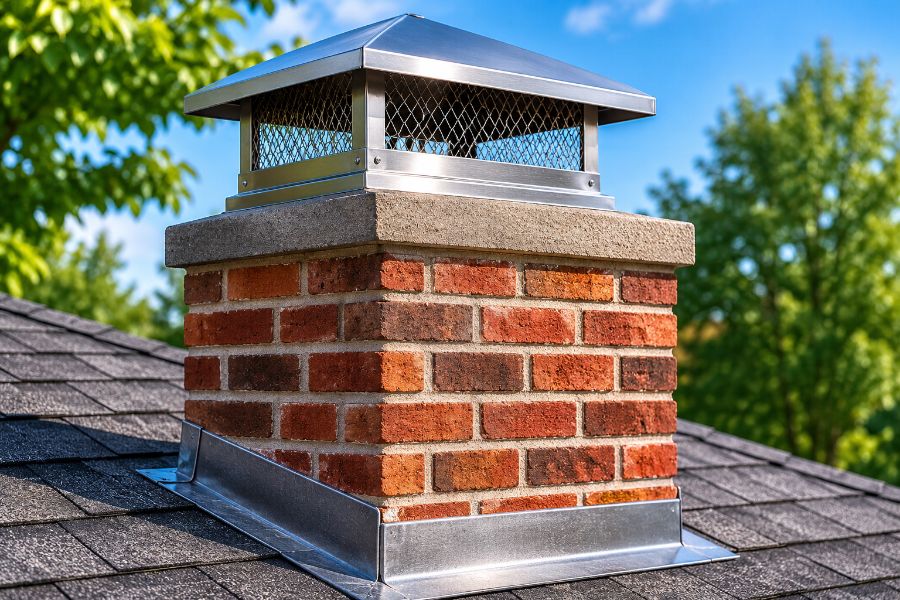
The crown is the slab on top of the chimney that covers the masonry around the flue. It’s designed to shed water away from the brick. Iowa’s freeze-thaw cycles open cracks in it, and once it’s cracked, water goes straight down into the chimney. Chimney crown repair seals and restores it.
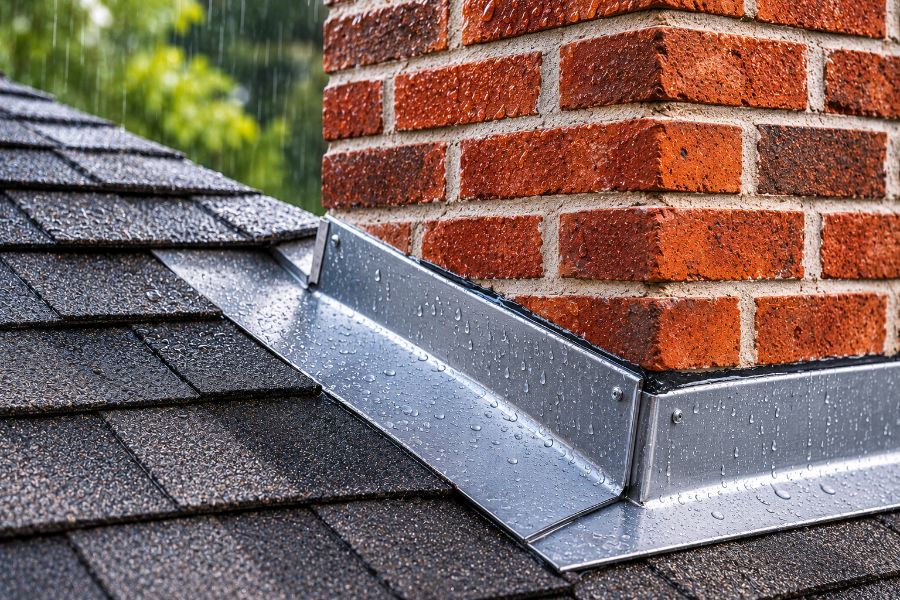
The flashing
Flashing is the metal seal where the chimney meets the roof. It can pull loose, rust or be installed poorly to begin with. Leaks at the flashing usually show up as stains on the ceiling or wall right next to the chimney. Flashing repair stops the water at the roofline.
The brick and mortar
Masonry is porous. It soaks up rain and melting snow, and when that water freezes it breaks the brick and mortar apart from the inside. White staining, flaking brick faces and crumbling joints are all signs. After needed repairs, chimney waterproofing helps the masonry shed water while still letting moisture vapor escape.
The open top
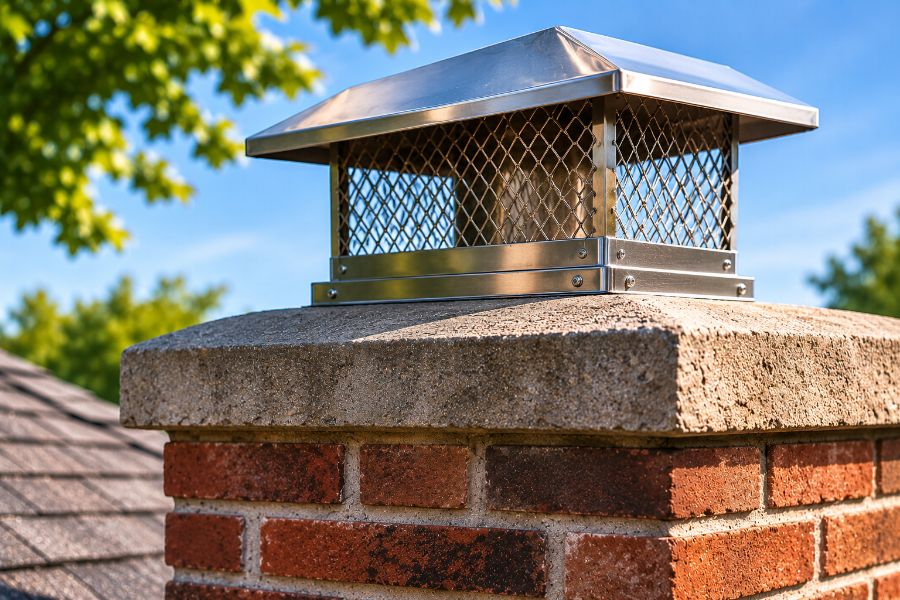
A chimney without a cap collects rain and snow directly. That water rusts dampers and wears away the inside of the chimney. A chimney cap is a simple, effective fix, and it keeps animals out too.
Finding the Leak From the Inside
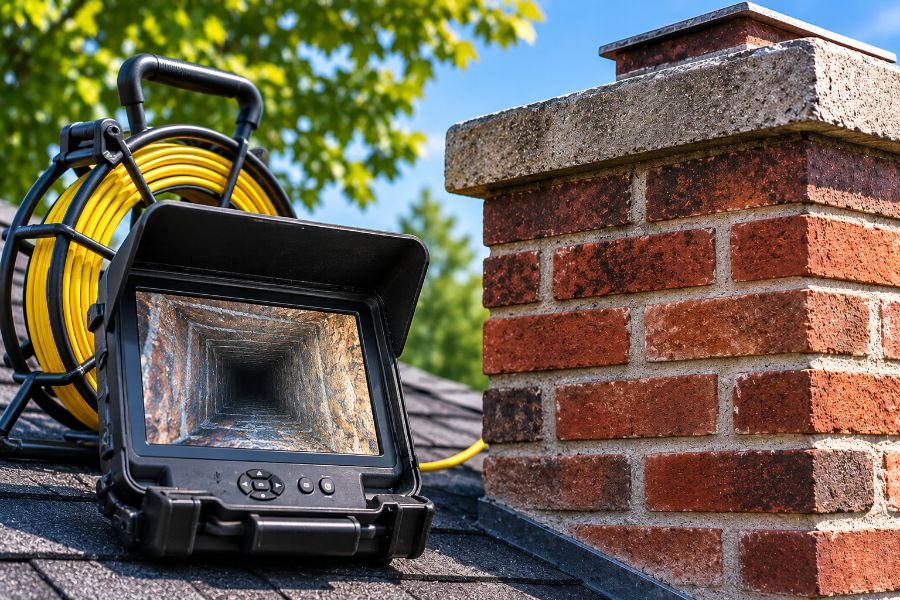
Water stains rarely appear right where the water gets in. It can enter at the crown, run down inside the chimney and show up as a stain several feet lower. That’s why we don’t stop at the stain. A chimney inspection covers the system from the top of the stack down to the firebox, and our Chim-Scan camera shows us the inside of the flue. Water damage in there looks like cracked or shifted liner tiles, rust and stained, eroded mortar.
Once we know the source, we can recommend the repair that actually stops it instead of patching the symptom. Sometimes there’s more than one entry point, like a cracked crown and loose flashing on the same chimney, and both need fixing for the leak to stop.
Prefab Chimneys Leak Too
Factory-built fireplaces don’t have a masonry crown. Instead, a metal chase cover sits on top of the framed chase. Over time those covers rust, dent or get damaged by animals, and water pools on them until it finds a way in. A leak from a failed chase cover can soak the framing inside the chase long before you see a stain. We can find the right replacement for your unit and install it.
Leaks Show Up in Other Ways
A ceiling stain isn’t the only clue. Rust on the damper or firebox floor, water dripping into the fireplace during a storm, peeling paint or wallpaper near the chimney and a damp, musty smell all point the same direction. So does white, chalky residue on the outside brick. If you’re seeing several of these at once, the water has likely been getting in for a while.
Don’t Wait for Spring
It’s tempting to put off a leak until the weather is nicer. The problem is that the cold months are exactly when the damage happens.
Repairs themselves go best in mild, dry weather, which is one more reason to get the inspection done early and have the work scheduled before the next freeze. Every winter a leak goes unrepaired, the damage spreads. Water that gets into the chimney can rot the framing around it, ruin drywall and lead to mold. If you’ve noticed a stain, a drip or a musty smell, call us. We’ll inspect the chimney, find where the water is getting in and explain your options. If the leak is coming from the roof itself and not the chimney, we’ll tell you that too.
What a Sweep Takes Out
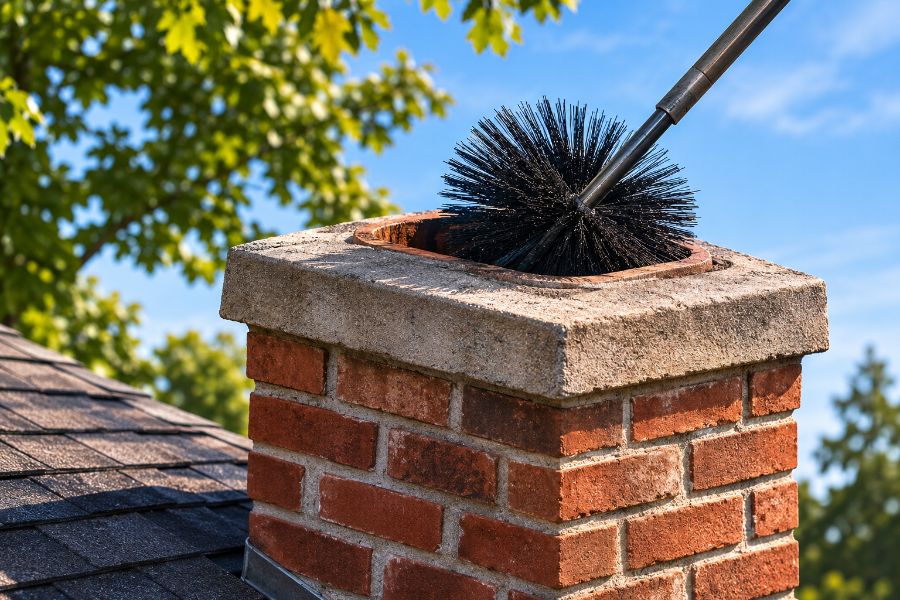
A chimney sweeping removes creosote, soot and debris from the flue, the smoke chamber and the firebox. When water has been getting in, those deposits often turn into a damp, smelly layer that’s hard on mortar and metal parts. Clearing it out also gives us a clean surface to inspect, so cracks and gaps aren’t hidden under buildup. Dust control and floor protection go down before we start.
Wood Stoves and the Right Liner
Some homes around Corydon have a wood stove or insert set into a chimney that was originally built for an open fireplace. The old flue is often too big for the stove, or the clay liner has cracked over the years, and either one can cause poor draft and fast creosote buildup. A properly sized liner fixes that. It also protects the masonry around it from the heat and acidic byproducts a hard-working stove sends up the flue, which is especially important in a chimney that has already taken on water.
Stainless steel liners are approved for all fuels and come with a lifetime warranty when professionally installed. For a clay liner that’s damaged but still sound, HeatShield® repair may be an option. Read more about chimney relining.
Buying a House in Wayne County
If a home you’re buying in Corydon has a fireplace or stove, ask for a Level 2 chimney inspection before closing. NFPA 211 calls for one whenever a property is sold or transferred, and it includes a camera look inside the flue that a general home inspection won’t give you. That’s especially useful on an older chimney with a history of leaks.
Dryer Vents and Ductwork
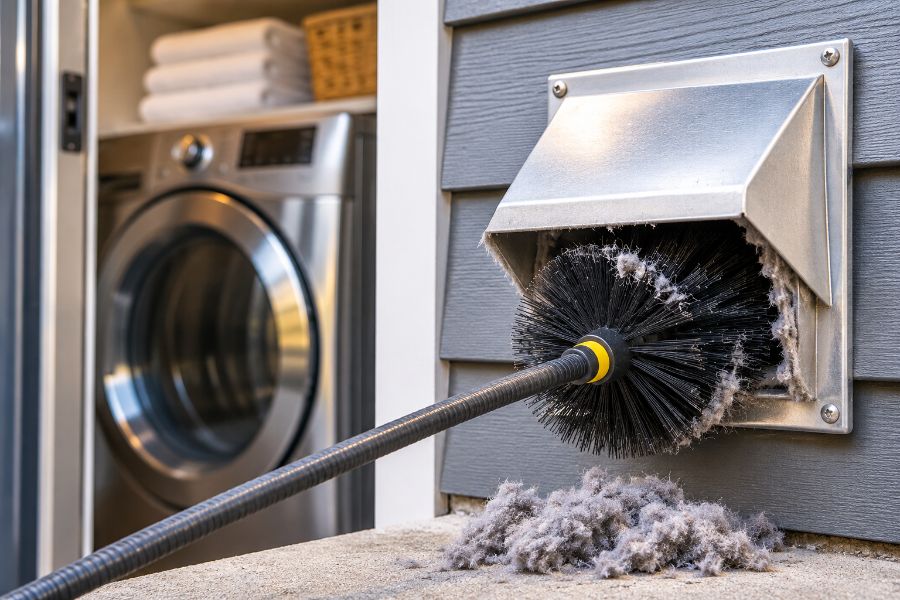
While we’re in the house, we can clean the dryer vent and the air ducts. A lint-packed dryer vent makes every load take longer and is a real fire risk. Our certified dryer vent cleaning clears the full run. For ductwork, we use a HEPA vacuum and specialized brushes so the dust we loosen leaves with us.
Certified Chimney Professionals
Leak work takes someone who understands how a chimney is built. Tom Hunkele, our owner, is a Past President of the National Chimney Sweep Guild, and the team behind him includes a Certified Chimney Professional and a CSIA Certified Chimney Sweep. We’re family owned and operated, and we guarantee a mess-free job inside your home.
We also serve Centerville and Leon.
Got a leak? Call (515) 249-6337 to schedule an inspection in Corydon, or request an appointment online.